From Learning to Earning: Uganda Partners Call for Stronger Pathways for Young People
By Evaline Acan
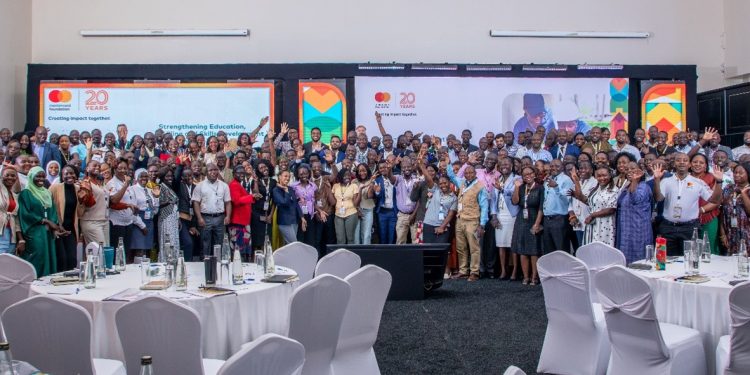
The Regional Universities Forum for capacity Building in Agriculture (RUFORUM) participated in the Mastercard Foundation Uganda Partner Convening on Workforce Development held on Friday, August 14, 2026, at Mestil Hotel and Residences in Kampala. Held under the theme “Strengthening Education, Skilling and Skills Development Pathways for Young People,” the convening brought together Mastercard Foundation partners, young people, government ministries and agencies, and Foundation staff to examine how education and skills development can translate into dignified and fulfilling work for young people.
The discussions focused on the growing gap between learning and earning. While education is expected to prepare young people for productive careers, many graduates continue to struggle to find employment, start businesses or apply their skills in meaningful ways. At the same time, the labour market is changing rapidly, driven by technology, artificial intelligence, digitalisation and the growth of the green economy. These changes are creating new occupations and increasing demand for technical and soft skills, yet education and skilling systems are not always adapting at the same pace.
Uganda faces a significant youth employment challenge. The convening highlighted that young people aged 15 to 24 experience an unemployment rate of 17.9 percent, rising to 21 percent among young women according to the Uganda Bureau of Statistics. In addition, 42.6 percent of young people have no education, employment or training. These figures demonstrate that expanding access to education alone is not enough. Young people also need clear pathways that connect education and training to economic opportunities.
A key message from the discussions was the importance of moving beyond the classroom. One example shared at the convening demonstrated how practical training can give young people the confidence and competencies needed to take action. Through a Mastercard Foundation supported programme, Dr. Lydia Mary Ajilia, gained access to online courses in work readiness and entrepreneurship. The skills acquired helped her to explore entrepreneurship and eventually started a small fresh-fruit business using a refrigerator provided by a relative.
The experience illustrated that young people may not always need to wait until they have every resource before starting. However, individual determination must be supported by systems that provide access to mentorship, finance, networks, tools, markets, work experience and employers willing to create opportunities. Successful transitions from learning to work therefore require collaboration among young people, education institutions, government, employers and development partners.
Participants called for education and skills programmes to become more responsive to labour-market needs. Instead of designing training solely around what institutions can offer, programmes should begin by understanding the skills demanded by employers and emerging sectors. Greater private-sector involvement in identifying skills gaps and shaping curricula was identified as important, while apprenticeships, internships, industry placements and practical projects can help young people gain experience and apply classroom knowledge in real-world environments.
For young entrepreneurs, access to finance was also highlighted as an important part of the transition. Seed grants, savings schemes, innovation challenges and other forms of start-up support can enable young people to turn their ideas and skills into viable businesses, particularly when support is provided early.
 Dr. Abigeal Otinga, Senior Programme Officer for Systems Strengthening at RUFORUM presenting at the Mastercard Foundation Uganda Partner Convening
Universities were also identified as critical players in strengthening workforce pathways. Dr. Abigeal Otinga, Senior Programme Officer for Systems Strengthening at RUFORUM stated that Transforming African Agricultural Universities to Meaningfully Contribute to Africa’s Growth and Development (TAGDev) programme implemented by RUFORUM in partnership with the Mastercard Foundation and 12 African universities is working to improve institutional environments and transition pathways, particularly for young women, persons with disabilities and other vulnerable groups. Participants emphasised that universities must go beyond producing graduates by strengthening staff development, leadership, learning environments and relationships with employers and communities.
Dr. Abigeal Otinga further stressed that inclusion must be intentional. Young women, persons with disabilities and young people from underserved communities may face additional barriers even when they possess the required qualifications and skills. Addressing these challenges requires better data, targeted resources and a deeper understanding of the different circumstances affecting young people’s transitions.
Listening and collaboration emerged as another important theme. The convening created space for partners and young people to share experiences, identify what is working and explore what needs to change. Participants considered the establishment of a Workforce Development Community of Practice to facilitate continued learning, evidence sharing and collaboration among organisations working across education, skills development and employment.
Finally, participants called for a shift from simply counting the number of young people trained to measuring real outcomes – including number of employments, business created, number of participants perusing further learning and the barriers preventing young people from progressing.
The journey from learning to earning, participants concluded, does not end with a certificate. It begins when young people are given the skills, networks, experience and opportunities they need to turn learning into meaningful livelihoods.