Ugandan School Leaders Call for Skills-Based Education to Drive Youth Innovation, Employment and Bioeconomy Transformation
Kampala, Uganda – Ugandan school leaders have called for a fundamental shift in education, urging schools to move beyond academic achievement and equip young people with practical skills, entrepreneurial mindsets and the ability to transform locally available resources into sustainable livelihoods.
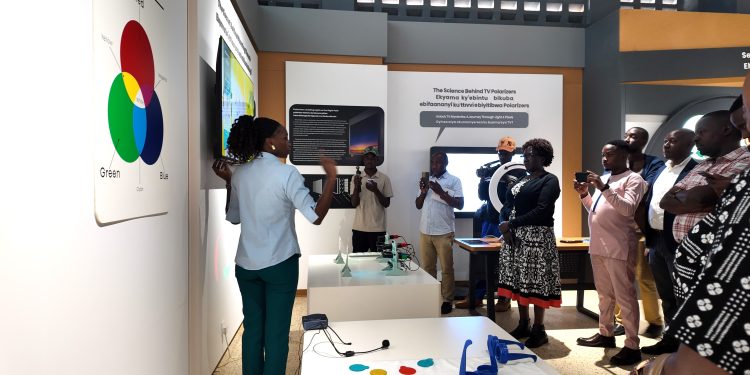
The call emerged during a two-day workshop on, A Bioeconomy Skills Compact for Education and Agricultural Transformation, held from 9–10 October 2026 at Hisense headquaters. The workshop brought together heads of schools and education stakeholders under a partnership led by the STEM Industry School Partnership, Uganda Martyrs University, the Regional Universities Forum for Capacity Building in Agriculture (RUFORUM), ECOCA and Hisense.
The discussions asked a critical question: What kind of graduate should Uganda’s education system produce to respond effectively to today’s economic, social and environmental challenges?
For the participating school leaders, the answer was clear: a graduate who can think critically, solve real-world problems, create employment opportunities and contribute meaningfully to community development.
School Leaders Prioritise Practical Skills Over Academic Achievement Alone
Findings from an analysis of responses submitted by 37 school leaders revealed strong demand for a more practical, innovative and entrepreneurial approach to education.
The participants identified 118 desirable graduate attributes, with 73% of response cards emphasising practical problem-solving skills. Critical and creative thinking, alongside self-leadership and resilience, each featured in 51% of responses.
Entrepreneurship and character development were each highlighted in 32% of responses, reflecting growing recognition that education must nurture not only knowledge and technical competence but also initiative, integrity and the ability to create economic opportunities.
One school leader described the ideal graduate as someone who can “solve problems using the local materials from the environment” and transform those materials into valuable resources.
Another envisioned a young person who would “make money and not look for money”, underscoring the need to prepare learners to become job creators rather than depend solely on formal employment.
These perspectives highlight an emerging consensus among school leaders that the success of education should increasingly be measured by what graduates can do with their knowledge and how effectively they can improve their own lives and communities.
Positioning Schools as Drivers of Uganda’s Bioeconomy
The discussions placed particular emphasis on the role of schools in advancing Uganda’s bioeconomy through the sustainable use of agricultural and other biological resources.
With agriculture remaining central to Uganda’s economy and livelihoods, participants recognised an opportunity for schools to connect classroom learning with practical agricultural innovation, value addition, enterprise development and environmental sustainability.
Rather than treating agriculture and entrepreneurship as isolated subjects, the emerging approach encourages learners to identify challenges within their communities and develop practical solutions using locally available resources.
Such an approach could enable young people to explore opportunities in agricultural processing, product development, sustainable resource management and small business creation while still in school.
The school leaders also emphasised the importance of producing graduates who are self-reliant, adaptable and capable of applying their knowledge to everyday challenges.
A New Framework for Developing Well-Rounded Graduates
Drawing on the school leaders’ responses, the workshop’s analytical report, The Graduate We Want, identified four interconnected competence areas that could guide schools in developing graduates equipped for the demands of a changing economy.
The framework brings together the ability to THINK, through critical thinking, creativity and innovation; DO, through practical problem-solving and entrepreneurship; BE, through character, values, self-leadership and resilience; and RELATE & SERVE, through leadership, communication, community engagement and environmental responsibility.
The analysis found that all 37 respondents identified attributes spanning at least two competence clusters, demonstrating that school leaders view graduate readiness as a combination of technical abilities, personal qualities and social responsibility.
Practical competence emerged as the most prominent area, appearing in 81% of response cards, followed by character and personal development at 65%, thinking and innovation at 57%, and leadership, community engagement and environmental responsibility at 49%.
Together, these findings reinforce the importance of an integrated education model that develops the whole learner rather than focusing narrowly on examination performance.
Digital Literacy and Financial Skills Emerge as Critical Gaps
Despite the strong emphasis on practical and entrepreneurial skills, the findings also revealed areas requiring greater attention.
Digital and foundational literacies appeared in only 14% of response cards, while research skills, financial literacy and environmental stewardship were each mentioned only once or twice.
Although these findings reflect the priorities expressed by participants rather than a direct assessment of existing school curricula, they point to competencies that may need to be deliberately strengthened.
For young people seeking opportunities in an increasingly technology-driven agricultural economy, digital literacy, financial management and research capabilities are essential for developing viable enterprises, accessing markets and adopting innovative solutions.
The workshop’s findings therefore underscore the need for schools to integrate these competencies into practical learning experiences, ensuring that graduates are prepared not only to generate ideas but also to translate them into sustainable economic ventures.
Turning Education Reform Ambitions into Practical Action
Beyond identifying the attributes of an ideal graduate, the workshop outlined a practical pathway for schools to translate the proposed competencies into everyday teaching and learning.
The report proposes six integrated programmes: community challenge projects; school enterprise and agribusiness clubs; life skills and self-reliance activities; leadership, values and mentorship programmes; digital and innovation laboratories; and green school and environmental stewardship initiatives.
These programmes are designed to strengthen multiple competencies simultaneously without necessarily introducing additional standalone subjects into already demanding school timetables.
Through school enterprises, for example, learners could gain hands-on experience in production, financial management, marketing and teamwork. Community challenge projects would encourage learners to identify local problems and develop innovative solutions, while green school initiatives would promote environmental responsibility and sustainable resource management.
The proposed implementation framework includes learner portfolios and a four-level competency assessment system, progressing from Beginning to Developing, Proficient and Advanced.
A phased rollout over six school terms is envisaged, with participating schools encouraged to begin by piloting at least one programme in the following school term and sharing their experiences with the wider network.
Building a Community of Practice for Lasting Education Transformation
RUFORUM emphasised the importance of sustaining the momentum generated by the workshop through continued institutional collaboration, leadership development and knowledge exchange.
Speaking at the workshop, Professor Anthony Egeru, Manager – Skilling and Engagement for Community Development at RUFORUM, described the engagement as the beginning of a longer-term process aimed at supporting institutional transformation.
“This event is an inaugural event that we will continue to develop through a community of practice for championing institutional transformation,” he said.
He further encouraged participating school leaders to develop institution-specific theories of change that would provide clear direction for improving educational delivery and strengthening institutional leadership.
The proposed community of practice is expected to provide a platform for continued engagement, peer learning and the sharing of experiences as schools explore practical approaches to skills-based education.
Shaping a Generation of Innovators and Job Creators
The workshop represents an important contribution to ongoing efforts to make education more responsive to Uganda’s development priorities, particularly youth employment, agricultural transformation and sustainable economic growth.
By placing practical problem-solving, entrepreneurship, innovation and character development at the centre of graduate readiness, the participating school leaders have articulated a vision of education that extends well beyond the classroom.
The next challenge will be translating that vision into measurable changes in teaching, learning and institutional practice.