Rethinking the Role of Communication in Programme Delivery
By Evaline Acan
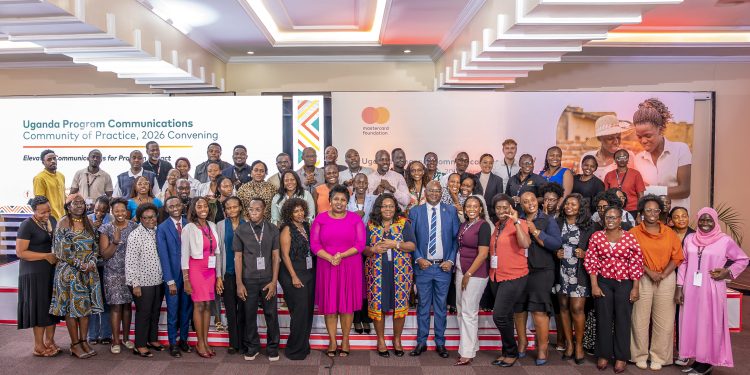
Kampala, Uganda – The Regional Universities Forum for Capacity Building in Agriculture participated in the Uganda Programme Communication Community of Practice convened in Kampala by the Mastercard Foundation Uganda office. The workshop brought together over 50 communications focal persons from Mastercard Foundation supported partnerships across Uganda. The convening provided a platform for cross-learning, sharing best practices, and deepening insights into critical pillars of programme communications. The workshop aimed to strengthen the strategic, technical, and advisory capabilities to advance programme goals and amplify impact.
One of the key messages that emerged from the conversations among the communication practitioners was that for many development programmes, communication has traditionally been associated with documenting activities, taking photographs, producing success stories and sharing updates. As programmes become more complex and seek to deliver lasting outcomes for young people and communities, communication is increasingly being recognized as more than a support function but a strategic component of programme delivery.
Communication can help bridge gaps.
In Uganda’s coffee-growing regions, for example, young women contribute significantly to coffee production but often face barriers that limit their participation and economic benefits. Limited access to land, finance, markets, identification documents and technology, alongside cultural restrictions and limited decision-making power, can constrain their opportunities.
For these young women, communication is not simply about telling their stories. It is about helping them understand and see the opportunities available to them.
Coffee offers opportunities beyond growing, picking and sorting. Young people can participate in nurseries, extension services, agronomy, rehabilitation and rejuvenation of coffee trees, and barista services. Communication can help make these pathways visible and connect young people to the information, skills and opportunities required to pursue them.
A panel session
Communication also plays a critical role in ensuring that evidence generated through programs does not remain within reports and databases. Programme closure, in particular, was highlighted as an opportunity to extend programme legacy rather than simply mark the end of activities. Instead of focusing only on final events, publications and outstanding stories, communication teams can work with programme and monitoring, evaluation and learning teams to identify important evidence and lessons.
The questions should include: What have we learned? Why does it matter? Who needs to know? And what should happen differently as a result?
Sharing evidence through the appropriate channels can also enable lessons from one programme to inform future interventions and wider development ecosystems. A strong closure strategy should therefore leave behind more than a record of achievements, but should leave knowledge, evidence and relationships that others can use.
Putting communication at the programme planning table
For communication to contribute meaningfully to development outcomes, it should be integrated from the beginning of the programme cycle rather than involving communication teams only when an event needs publicity or a success story is required. Communication professionals should participate in programme planning, implementation, field visits, monitoring and learning.
This means asking communication questions alongside programme questions: What needs to be communicated? To whom? By whom? Through which channel? When? And why?
When communication is integrated into programme design, it can help programmes understand their audiences, identify barriers, build trust and connect people to opportunities. When embedded in implementation, it can strengthen engagement and learning. At programme closure, it can extend legacy and ensure that evidence continues to inform others.
Effective communication is more than telling people what a programme has achieved but should help people understand opportunities, strengthen participation, share evidence, amplify voices and enable others to take action.
As communicators, we should always ask this question “And then what?”
A programme may provide young people with skills, financing, equipment or other forms of support. But what happens if they cannot communicate the value of what they have learned, access markets, articulate their capabilities or connect with opportunities?
Young people as communicators and not just audiences
Organizations should learn to recognize young people as active participants in communication through community-based storytelling, youth communication champions, role models and community trainers as this can create spaces where young people communicate their experiences, concerns and aspirations in ways that resonate with their peers especially where cultural and social barriers influence participation.
However, communication approaches must be grounded in the realities of the communities they seek to reach. Audience mapping is therefore critical. Different audiences require different approaches, and some may be more effectively reached through social media, community mobilisation, gatekeepers, local leaders or other trusted channels. Effective communication, therefore, begins with listening and understanding the audience before messaging.

Rachel Nandelenga, Head, Programme Communications at Mastercard Foundation Uganda office, giving a few remarks as the host
Building trust in an AI-enabled world
The rise of artificial intelligence (AI) is adding another dimension to communication work. AI can support efficiency, generate ideas, refine strategies and assist with content production. However, practitioners emphasized that it cannot replace the human understanding required to communicate authentically about programs and communities.
The value of communication professionals increasingly lies in their strategic thinking, creativity, judgement and ability to connect meaningfully with people.
Participants were encouraged to use AI to strengthen, challenge or refine ideas rather than replace the thinking process. AI-generated content must also be reviewed, humanised and checked for accuracy, context, bias and misinformation. Protecting personal and sensitive information is equally important. As AI becomes increasingly embedded in communication work, the responsibility to protect authenticity, credibility and trust remains with communicators.
The discussions also highlighted communication’s role in managing programme risks. Effective risk mitigation requires clear plans, risk registers, early identification of potential incidents and pre-approved communication materials, including FAQs and key messages.
Media engagement should similarly be approached as a long-term relationship rather than a last-minute response to a major story. Sustainable media partnerships are built by engaging journalists and media organizations before there is an urgent story to tell.
Ultimately,when communication is integrated from the beginning and grounded in the realities of communities, it can contribute not only to how programs are understood, but also to how they are delivered and the outcomes they achieve. The opportunity for communicators is therefore to take their place at the programme planning and decision-making table, using creativity, evidence, technology and human connection to help turn programme investments into meaningful and lasting impact.