Bridging Borders: How UM6P Is Turning Displacement Into Opportunity
By the TAGDev 2.0 Team
Mohammed VI Polytechnic University (UM6P), Morocco
In partnership with RUFORUM and the Mastercard Foundation
Contact: abderrahmane.haddad@um6p.ma
For millions of people uprooted by conflict and crisis across Africa, access to education and economic opportunity often remains out of reach. Mohammed VI Polytechnic University (UM6P) is working to change that equation — not through a single gesture, but through a growing web of partnerships designed to give refugees and displaced persons a genuine foothold in academic and economic life.
A Landmark Agreement on World Refugee Day
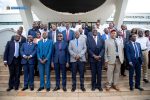
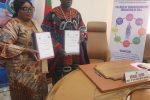
The centerpiece of this effort came on June 19, 2026, when UM6P marked World Refugee Day by signing a Memorandum of Understanding with the United Nations High Commissioner for Refugees (UNHCR) Morocco. The agreement lays out a formal framework for collaboration across five key areas: expanding refugees’ access to higher education, promoting academic inclusion, advancing research into forced displacement, strengthening institutional and individual capacities, and supporting refugees’ socio-economic and professional integration.
Rather than a symbolic pledge, the MoU is designed as a working partnership — one intended to sharpen support mechanisms for refugees, spur innovative solutions for sustainable inclusion, and bring together the many stakeholders already engaged in displacement-related work.
The agreement also marks a concrete step in implementing UM6P’s broader commitments to refugees and displaced persons (RDPs) under its TAGDev 2.0 program. As the initiative charged with translating the university’s inclusion goals into action, TAGDev 2.0 has made support for displaced populations a defined priority — and the UNHCR partnership gives that priority an official, institutional framework to build on.
Looking Beyond Morocco’s Borders
UM6P’s ambitions extend well past its own campuses. Through its TAGDev 2.0 program, the university has opened exploratory talks with the University of Bamenda in Cameroon, aiming to support refugees in crisis-affected communities across the region.
An initial meeting between the two institutions focused on the North-West Region of Cameroon, where teams examined the realities facing displaced populations and began mapping out where the two universities’ strengths might intersect. Four priority needs emerged from those conversations: financing for refugee-led businesses, support for agri-food processing, development of agroforestry and community tree nurseries, and broader efforts to improve livelihoods and economic empowerment.
From Conversation to Concept: Two Emerging Pillars
While still in the discussion phase, two potential areas of collaboration have taken shape.
Fueling refugee entrepreneurship. UM6P is weighing financial support that would help the University of Bamenda launch a revolving fund — a self-sustaining pool of capital to back youth-led enterprises and startup grants. The vision also includes entrepreneurship bootcamps that would walk refugees through the process of starting a business, encouraging self-employment and more resilient livelihoods.
Growing green, community-led solutions. A second track under discussion would see UM6P support agricultural inputs — from crop protection products to irrigation systems — that could help establish refugee-managed tree nurseries and drive agroforestry and environmental restoration work. The goal is to strengthen local food and agricultural production while giving displaced communities a direct stake in the land they cultivate.
Both proposals remain subject to further discussion before implementation, but they signal the direction UM6P hopes its partnerships will take: practical, community-rooted, and built for the long term.
What Comes Next
UM6P describes this moment as the early stage of a broader strategy — one focused less on grand announcements and more on the groundwork of partnership-building. Coming discussions will center on defining exactly how collaboration with Bamenda and other institutions will work in practice, and identifying the resources needed to turn shared ambitions into action.
Taken together, the UNHCR agreement and the Cameroon discussions point to a university trying to make inclusion tangible — treating displacement not just as a humanitarian challenge, but as a call for education, enterprise, and environmental stewardship to work in concert.