Water4Dev Supports Sustainable Improvements in Rural Water Quality in Burundi
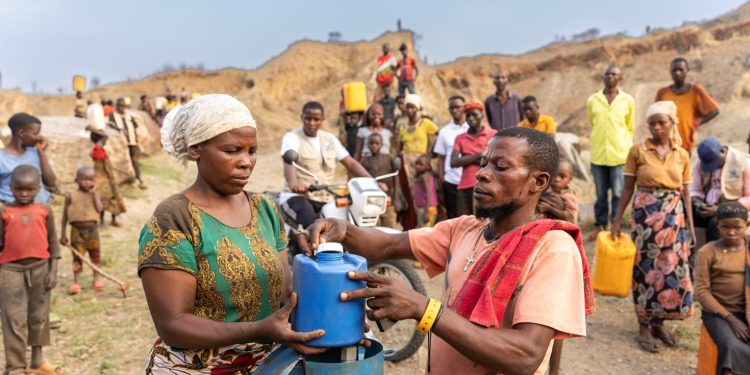
Burundi is among one of the most water-stressed countries in the world, not by scarcity, but by safety. In Cibitoke Province, in the northwestern region, rivers run through the landscape, with an abundance of seasonal rains, and yet for the families living there, a cup of water has long carried a hidden risk. A 2019 study by the GIZ (in English: German Corporation for International Cooperation) found that that 25% of water sources were contaminated with bacteria, while 75% of household-stored water was bacterially contaminated and unsafe for consumption. This poor water quality contributes to a high burden of diarrheal diseases, affecting more than 32% of children under five and accounting for approximately 15% of child deaths nationwide. According to the Ministry of Health, diarrhoea is also a major contributor to malnutrition. Burundi has one of the highest rates of chronic malnutrition globally, with 52% of children under five stunted – well above the World Heath Organisation (WHO) emergency threshold.
Although the WHO has recognised chlorination as the most widely used and cost-effective method for disinfecting drinking water, largely because it continues to protect water from recontamination during transport and storage, its use in Burundi remains extremely limited. Leaving the vast majority exposed to preventable waterborne diseases.
There is sufficient research that identifies the causes of poor water quality however, most interventions focused primarily on expanding access to water rather than ensuring its safety throughout the supply chain. As a result, water quality remained a critical and largely unmet challenge.
Burundian born Olivier Nihimbazwe, a Transforming African Agricultural Universities to Meaningfully Contribute to Africa’s Growth and Development (TAGDev) Scholarship beneficiary (Cohort 3) at Gulu University, in Uganda, pursued an MSc in Food Security and Community Nutrition between 2019 and 2021. Before starting his Master’s degree, he took part in the 2019 TAGDev orientation programme, where participants were challenged to design a “give-back” initiative to address a pressing community problem after graduation. Having always been passionate about community service, Nihimbazwe chose to tackle Burundi’s urgent public health challenges: waterborne diseases and recurrent cholera outbreaks caused by unsafe drinking water.
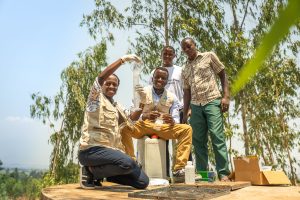
Olivier Nihimbazwe with his team from Water4Dev
Nihimbazwe immediately began researching on existing water treatment efforts, identify barriers to effective chlorination, while pursuing additional courses in civic engagement, social entrepreneurship, leadership, and resource mobilisation facilitated under the TAGDev programme. Community-level water chlorination emerged as the most promising intervention. During the COVID-19 lockdown in 2020, he dedicated his time to developing this idea, which led to the establishment of Water4Dev, an enterprise that provides innovative water solutions to reduce waterborne diseases and strengthen water safety across Burundi.
Based on market research conducted by Water4Dev, it was evident that some of the main barriers to water treatment were two-fold. First, difficulties in accessing chlorine due to high costs related to importation and low availability of foreign exchange. Secondly, there was no locally available technology for chlorinating community water systems, limiting the ability to provide safe water at scale.
In 2020, Water4Dev participated in the D-Prize Global Competition, seeking seed funding to pilot a chlorine dispenser innovation in Cibitoke Province. The enterprise successfully secured USD $16,000 through different stages of the competition. The Regional Universities Forum for Capacity Building in Agriculture (RUFORUM) stepped in to provide Nihimbazwe with support to travel back to Burundi to formally register the enterprise and launch the project, while also providing further entrepreneurship and leadership training to strengthen his capacity as a social entrepreneur in partnership with the Mastercard Foundation under TAGDEv.
One of the biggest implementation challenges he faced was securing a sustainable supply of liquid chlorine. Initially, the enterprise relied on imported chlorine, making the intervention expensive and vulnerable to global supply chain disruptions. Recognising that long-term success would require local production, the Water4Dev team conducted extensive desktop research and consulted international WASH experts to identify suitable technologies. This process led them to WATA technology, which produces liquid chlorine through the electrolysis of salt, water, and electricity. This partnership provided agency for transformation. Locally produced chlorine was not only more affordable but also served multiple purposes, including treating drinking water, Infection Prevention and Control (IPC) in healthcare facilities, surface disinfection, hand hygiene, and laundry bleaching.
The incorporation of local chlorine production attracted notable interest from government institutions, development partners and private organisations. As demand for their products increased, Water4Dev transitioned from a “give-back” initiative into a sustainable social enterprise with a viable business model.
Five years on, Water4Dev has reached more than 240,000 people through local chlorine production, community and institutional water chlorination, IPC, and emergency chlorination efforts during disease outbreak interventions. Working closely with government institutions and development partners such as UNICEF and Enabel, the enterprise significantly improved access to safe drinking water while strengthening public health systems.
The numbers speak to its impact, for example, Cibitoke Province has historically been one of Burundi’s major cholera hotspots, with an average of 150–200 reported cholera cases each year. Since the introduction of Water4Dev’s water chlorination interventions in 2022, annual reported cases have fallen to fewer than 50. While multiple factors contribute to cholera control, improved access to safe, chlorinated water has played an important role in reducing disease transmission. Beyond these health gains, the initiative has also created employment opportunities for over 80 youths through local chlorine production and distribution, strengthened community awareness of water safety, and established a sustainable social enterprise model that continues to improve access to affordable water treatment services.
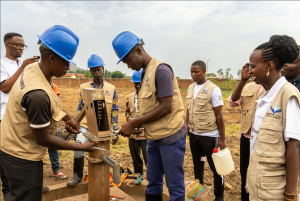
The Water4Dev team expanding installation and maintenance services for chlorination
By providing safe water through chlorination, households now no longer need to boil water over wood-burning stoves, reducing firewood consumption and greenhouse gas emissions. According to an independent impact assessment conducted by One Young World, Water4Dev’s clean water interventions had mitigated an estimated 173,643 tonnes of CO₂ emissions by 2023.
In 2022, Water4Dev was recognised as the second-best youth-led innovation during Burundi’s Innovation Week. This recognition attracted the attention of senior stakeholders, such as the National Agency for Rural Water and Sanitation (AHAMR) and UNICEF Burundi. Following discussions with UNICEF, the innovation was formally adopted to support water chlorination during cholera response operations. Furthermore, the enterprise signed a Memorandum of Understanding (MoU) with AHAMR and became an active member of the national WASH Sector Working Group, formalising their role in improving rural water quality through technical support, staff capacity building, and the supply of locally produced chlorine for cleaning and disinfecting piped water systems. The MoU also facilitates joint resource mobilisation to implement water quality programmes.
Though initially Water4Dev’s work focused on chlorine dispensers for small community water sources such as boreholes, recognising the value of continuous chlorination, the enterprise sought to expand treatment to larger piped water systems. Through its collaboration with AHAMR, Water4Dev supported the agency to develop a programme on automatic chlorination using Dosatron automatic dosing pumps, a technology that uses no electricity to inject chlorine in the water system continuously, suitable for large scale piped water systems. This initiative was funded by the Government of France to install eleven (11) dosing pumps in Cibitoke Province. Today, Water4Dev supplies chlorine for these systems and provides technical training to water technicians and other key stakeholders.
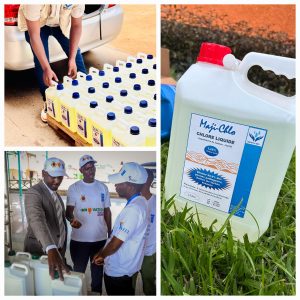
The liquid chlorine produced by Water4Dev
Water4Dev further supported AHAMR in 2024 to design a national water chlorination programme which subsequently secured an additional €500,000 in funding for the deployment of automatic water chlorination technologies. Under this initiative, Water4Dev serves as the technical partner, supplying locally produced chlorine, providing training for system operators and delivering ongoing maintenance and technical support to ensure the sustainability of the intervention.
Looking ahead, Water4Dev seeks support to expand its distribution network through youth-led chlorine sales franchises that will further increase access to safe water while creating more employment opportunities. This will require expanding chlorine production, training young entrepreneurs, and expanding installation and maintenance services for chlorination and IPC services.
In addition, the enterprise is developing a second revenue stream focused on solar-powered irrigation systems for horticulture and fish farming. By replacing costly fuel-powered pumps with solar technology, the company aims to improve agricultural productivity.
Overall, Water4Dev has helped elevate water quality from a neglected issue to a national priority within Burundi’s rural water sector. This is evidenced in the ongoing development of a national Water Safety Plan, a comprehensive strategy to ensure that water intended for human use is safe and free from contaminants.
Related media links
- MasterCard Foundation Story: https://mastercardfdn.org/fr/what-we-do/impact-stories/olivier-sur-le-mentorat-de-la-prochaine-generation-de-leaders-agricoles-au-burundi/
- One Young World 2023 Impact Report: https://www.oneyoungworld.com/sites/default/files/2025-03/Impact%20Report%202023.pdf
- One Young World Ambassador Spotlight: https://www.oneyoungworld.com/ambassador-projects/water-development
- Andika Magazine: https://andikamagazine.net/olivier-nihimbazwe-is-transforming-lives-in-cibitoke-province-through-his-organization-water-for-development/
- Africa Press: https://www.africa-press.net/burundi/toutes-les-actualites/cibitoke-du-chlore-made-in-burundi-pour-desinfecter-leau
- KAVIBE: https://www.kavibe.com/providing-clean-water-for-rural-communities-to-fight-diarrhea/