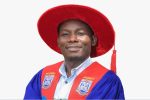
From Refugee Camp to Food Scientist: How Transformative Education Is Rebuilding a Family’s Future, One Shop at a Time
By Egerton University TAGDev Communication Team
For Abdinassir Siyad Mohammed, education was never just about academic achievement. Forced to flee Somalia with his mother and siblings due to insecurity, he grew up in the Dadaab Refugee Complex, where access to quality schooling and higher learning was limited at nearly every stage. For him, education represented something more foundational: the key to rebuilding a future that conflict had interrupted.
Abdinassir’s academic record showed potential. With support from humanitarian organisations, he completed both primary and secondary education and performed well in his final exams – results that would ordinarily open the door to university without question. But financial constraints kept that door closed. For a year and a half, he remained in the camp, applying to scholarship after scholarship without success.
“I knew education was the only way I could change my future, so I never stopped trying,” he recalls.
That persistence is worth underscoring: what stood between him and university was purely a resource gap, the exact kind of gap the Transforming African Agricultural Universities to Meaningfully Contribute to Africa’s Growth and Development (TAGDev) scholarship programme is designed to close.
His breakthrough came when he found the TAGDev Scholarship online, applied, and was selected – “I felt relieved and incredibly happy,” he says. “The scholarship gave me an opportunity I had waited for over a year to receive. It renewed my hope and strength to succeed.”
Now a first-year Bachelor of Science in Food Science and Technology student at Egerton University in Kenya, Abdinassir is working towards a professional goal: becoming a food scientist who contributes to food safety and food security across Africa.
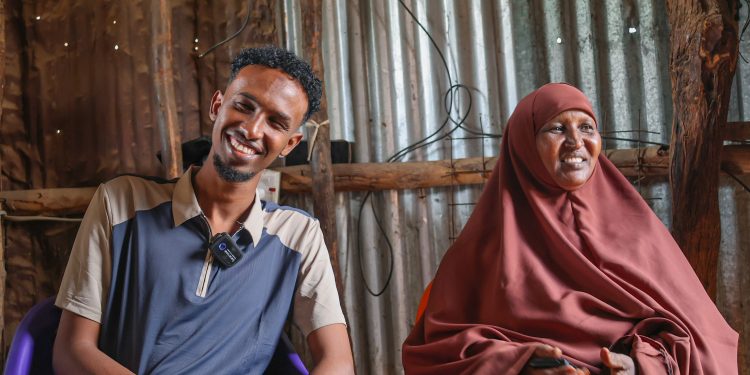
What makes Abdinassir’s story especially compelling is how quickly the investment began generating measurable impact. Through careful saving from his stipend, he established a retail shop for his mother in the Dadaab Refugee Camp. A business that now provides steady income, helps the family meet daily needs, and reduces their reliance on humanitarian assistance while serving the community.
His mother, interviewed about the shop’s impact, gleefully described how significantly it has improved the family’s livelihood and restored a sense of hope and sustainability. What began as support for a single student has, in her words, become an investment to the entire household.
Abdinassir himself sees this as only the beginning: “The impact I have experienced mentally and economically in just one year encourages me every day. If I have already been able to support my family while pursuing my studies, I believe that by the time I graduate, I will have transformed our lives in even greater ways.”
The programme’s impact hasn’t gone unnoticed by those overseeing refugee services on the ground. Mr. Daniel Karingiri, Deputy Camp Manager at the Dadaab Refugee Complex, has commended the TAGDev programme for creating opportunities for refugee youth through scholarships, entrepreneurship support, and wellness initiatives. He pointed to the strong partnership between the Department of Refugee Services and Egerton University, and reaffirmed the Department’s commitment to facilitating travel passes so refugee students can access higher education without interruption. He described TAGDev as a transformative initiative, one empowering refugee youth to pursue their dreams while creating lasting change within their families and communities.
That kind of institutional endorsement matters: it signals that the model isn’t just delivering individual success stories, but is recognised on the ground as functioning, replicable infrastructure for refugee inclusion.
Abdinassir’s trajectory offers development partners a real, fast-moving case study: qualified student → financial barrier removed → measurable household impact within a single year → and a clear professional path aimed at addressing food security challenges relevant well beyond his own community.
A refugee background limited Abdinassir’s access to higher education, not his capability! Once that access barrier was removed, the results were immediate, multi-generational, and aligned with a professional trajectory that will benefit others facing the same conditions he grew up in. His story reinforces a principle worth repeating to anyone deciding where education investment delivers the strongest return: refugee status should never be mistaken for a limit on what someone can create, achieve or contribute. Given the same opportunity as any other qualified student, a refugee scholar doesn’t just complete a degree , they can rebuild a household’s economic footing, inspire their community, and go on to address the very challenges that shaped their own early life to create a multiplier effect.