Call for Abstracts: Zambia Pre-AGM Scientific Conference
16th –20th November 2026
Introduction
Zambia stands at a pivotal moment in its development journey, with growing opportunities to leverage higher education, research, innovation, and entrepreneurship to address national and regional challenges. As the country seeks to strengthen food systems, climate resilience, public health, youth employment, and sustainable economic transformation, graduate students and young researchers are increasingly recognized as critical drivers of science-led development and innovation.
The Government of the Republic of Zambia, universities, research institutions, and development partners continue to prioritize investments in human capital development, research excellence, and knowledge generation to support national aspirations under Zambia Vision 2030, the African Union Agenda 2063, and the Comprehensive Africa Agriculture Development Programme (CAADP) Kampala Declaration (2026–2035). Universities are therefore expected to play a transformative role in generating evidence-based solutions, supporting policy development, and producing graduates equipped with the skills required for a rapidly evolving world.
Building on the commitments of the Regional Universities Forum for Capacity Building in Agriculture (RUFORUM) to strengthen graduate training, research uptake, and youth empowerment across Africa, the Zambia Pre-AGM Scientific Conference 2026 will provide a platform for Zambian graduate students, early-career researchers, innovators, and young professionals to share research findings, engage with peers and mentors, and contribute to Zambia’s development agenda through science, innovation, and technology.
The Pre-Conference event will also provide opportunities for networking, mentorship, innovation exhibitions, and publication of outstanding scientific work while showcasing Zambia’s growing contribution to research, development, innovation, agriculture, health, and higher education.
RUFORUM, in collaboration with RUFORUM member universities in Zambia (University of Zambia (UNZA), Copperbelt University (CBU), Mulungushi University (MU), and Kapasa Makasa University) and partner institutions, are pleased to announce the Call for Abstracts for the Zambia Pre-AGM Scientific Conference 2026.
- Dates: 16th –20th November 2026
- Venue: Blended (face-to-face and online)
- Host Institutions: University of Zambia (UNZA), Copperbelt University (CBU), Mulungushi University (MU), and Kapasa Makasa University.
- Target Participants: Only Zambian graduate students, researchers, innovators, academia, policymakers, development practitioners, and private sector stakeholders.
Conference Objectives
The conference aims to:
- Provide opportunities for graduate students and young researchers to share key outcomes from graduate-led research and innovations.
- Mentor, support, and promote young scientific talent through networking and engagement with experts and stakeholders.
- Showcase Zambia’s premier research, development, innovation, agriculture, and health initiatives.
- Strengthen collaboration among universities, research institutions, industry, policymakers, and development partners.
- Promote evidence-based solutions that contribute to sustainable national development and transformation in Zambia.
Thematic Areas for Submission
Abstracts are invited under the following sub-themes and critical topics:
Theme 1: Crop Improvement and Food Security
Background
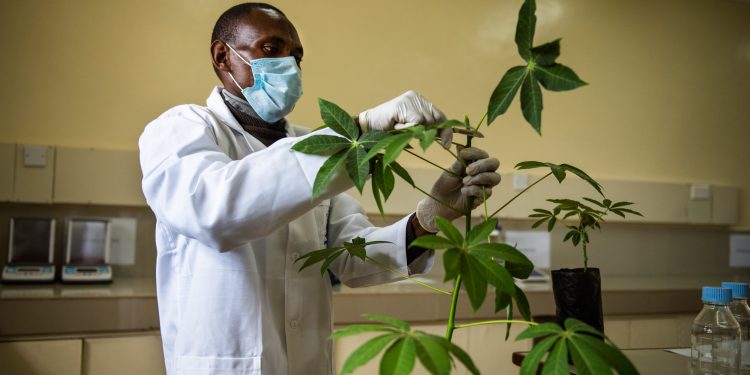
Crop productivity remains central to Zambia’s agricultural transformation and national food security. However, climate variability, pests and diseases, declining soil fertility, and limited access to improved technologies continue to constrain agricultural productivity and resilience. Research and innovation in crop breeding, biotechnology, seed systems, and sustainable production practices are essential to improving yields, strengthening resilience, and ensuring household food and nutrition security.
Universities and research institutions are increasingly expected to develop locally relevant technologies and climate-resilient crop systems that address emerging production challenges while supporting sustainable agricultural intensification and inclusive rural development.
Sub-themes
- Plant breeding and genetic improvement
- Seed systems and varietal development
- Biotechnology and molecular breeding
- Climate-resilient crop production systems
- Food and nutrition security innovations
Theme 2: Agroecology and Sustainable Agriculture
Background
Sustainable agricultural development is essential for maintaining ecosystem services, enhancing productivity, and building resilience against climate change. Agroecological approaches offer opportunities to promote environmentally sustainable farming systems through biodiversity conservation, integrated soil fertility management, efficient water use, and reduced dependence on external inputs.
As Zambia faces increasing environmental pressures, there is a growing need for innovative approaches that integrate ecological principles into agricultural production while improving livelihoods and supporting long-term sustainability.
Sub-themes
- Agroecological farming systems
- Soil health and fertility management
- Climate-smart agriculture
- Sustainable land and water management
- Biodiversity conservation and ecosystem restoration
Theme 3: Markets, Institutions, and Policy
Background
Effective markets, strong institutions, and evidence-based policies are essential for driving agricultural transformation, economic growth, and rural development in Zambia. Smallholder farmers and agribusiness enterprises continue to face challenges related to market access, value addition, financing, infrastructure, and policy implementation.
Research that informs policy development, strengthens institutions, and promotes inclusive market systems is critical for improving competitiveness, supporting entrepreneurship, and enhancing livelihoods across agricultural value chains.
Sub-themes
- Agricultural markets and value chains
- Agribusiness and entrepreneurship
- Agricultural finance and investment
- Policy analysis and institutional development
- Trade, food systems, and rural transformation
Theme 4: Animal Production and Health
Background
Livestock production contributes significantly to household incomes, food security, nutrition, and economic development in Zambia. However, productivity remains constrained by disease outbreaks, inadequate feed resources, limited veterinary services, and climate-related challenges.
Strengthening animal production systems through research, innovation, disease management, breeding, nutrition, and sustainable livestock practices is essential for improving productivity, resilience, and livelihoods.
Sub-themes
- Livestock breeding and genetics
- Animal nutrition and feed technologies
- Veterinary health and disease control
- Poultry, dairy, fisheries, and aquaculture systems
- Sustainable livestock production systems
Theme 5: Climate Change, Environment, and Natural Resource Management
Background
Climate change poses significant risks to agriculture, ecosystems, water resources, and livelihoods in Zambia. Addressing these challenges requires integrated approaches that strengthen environmental sustainability, climate adaptation, and natural resource management.
Research and innovation are needed to support resilient ecosystems, sustainable resource use, and evidence-based environmental governance while contributing to national and global climate action goals.
Sub-themes
- Climate adaptation and mitigation
- Natural resource governance
- Forestry and ecosystem management
- Renewable energy and sustainable technologies
- Disaster risk reduction and resilience
Theme 6: Public Health, Nutrition, and Community Development
Background
Health, nutrition, and community wellbeing are central to sustainable development. Zambia continues to face challenges related to malnutrition, emerging diseases, food safety, and unequal access to health services, particularly in rural communities.
Interdisciplinary research linking agriculture, nutrition, health, and social development is increasingly important for improving livelihoods and supporting inclusive community transformation.
Sub-themes
- Nutrition-sensitive agriculture
- Public and community health
- Food safety and quality
- Gender, youth, and social inclusion
- Community development and extension systems
Submission Guidelines
- Format: The scientific sessions will be conducted in a blended manner (face-to-face and online), and will include both oral and poster presentations.
- Target audience: Researchers, innovators, students, academia, and private sector leaders.
- Recognition: Outstanding achievers, including young scientists and agri-preneurs, will be recognized during the event.
Abstract Format:
- The abstract format should be submitted as a Word document. Scientific sessions will be conducted in a blended manner (face-to-face and online) and will include both oral and poster presentations.
- Abstract text: The abstract should have a maximum of 300 words excluding title, author names, and affiliations) and should include key issues: objectives, methods, results, and implications of findings.
- Do not include tables and graphs, and bullet points in the abstract.
- Submission Link: Abstracts must be strictly submitted via this link: https://forms.gle/3qsTHmfr4ajqLsvz8
- Authors of accepted abstracts will be invited to submit a full paper. Once accepted for the conference, these will be published in the peer-reviewed journals for the University of Zambia. All papers will be subjected to peer review and plagiarism checks before publication.
- You may submit more than one abstract. However, individuals selected for oral presentations will be permitted to give only one. Any additional accepted abstracts from the same presenter will be allocated as posters.
Important Dates:
- Abstract Submission Deadline: 30th August 2026.
- Notification of Acceptance: 30th September 2026.
- Full Paper Deadline: 30th October 2026.
Enquiries should be submitted to chewe.nkonde@unza.ac.zm with a copy to cgs@ruforum.org