Enhancing Africa’s Human Capital to Drive the Continent’s Development
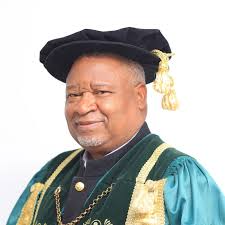
By Professor Imasiku Nyambe, Vice-Chancellor of Copperbelt University, Zambia
Africa’s greatest development asset is not found in its natural resources alone, but in the knowledge, skills, creativity and enterprise of its people. Our continent possesses immense agricultural potential, rich natural resources and a youthful population. Yet these advantages will translate into lasting prosperity only when we deliberately equip people to generate knowledge, apply innovation, strengthen productive sectors and create opportunities for their communities.
The theme of the 22nd RUFORUM Annual General Meeting calls on African universities to move beyond the generation of knowledge to its practical application. Its subtheme, “Enhancing Africa’s Human Capital to Drive the Continent’s Development,” places people at the centre of this transformation. It challenges us to ask not only how many graduates our institutions produce, but also how effectively these graduates contribute to employment creation, agricultural productivity, technological advancement and sustainable development.
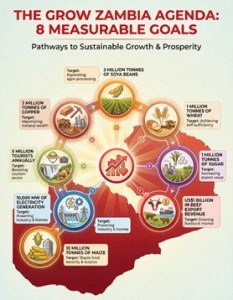
For the Copperbelt University (CBU), this responsibility is central to our institutional mandate and to our Strategic Plan 2025–2029, “Advancing Innovation, Excellence and Sustainability.” Our aspiration to be among the twenty leading African universities in Science, Technology, Innovation and Arts by 2050 must be reflected in the quality of our graduates, the relevance of our research and the value of our engagement with industry and communities. In addition, CBU will participate fully and offer human expertise to the Grow Zambia Agenda by the President of the Republic of Zambia Hakainde Hichilema with its main out-mate goals towards agriculture and livestock.
Human capital development is therefore not simply an educational outcome; it is a strategic investment in Zambia’s and Africa’s future.
As a multidisciplinary institution, the Copperbelt University brings together expertise in science, technology, engineering, business and related fields to respond to national and continental development needs. Our programmes in Agronomy, Sustainable Natural Resource Management and Climate Change, among others, are particularly relevant to the RUFORUM agenda. They contribute to the development of professionals capable of improving agricultural productivity, promoting food and nutrition security, managing natural resources responsibly and strengthening resilience to climate-related risks. Our task is to connect this expertise more deliberately with the needs of farmers, enterprises, policymakers and communities.
Our motto, “Knowledge and Service,” speaks directly to the expectation that higher education must deliver benefits beyond the university campus. It is also consistent with RUFORUM’s commitment to strengthening African universities as engines of agricultural innovation, capacity development and socioeconomic transformation.
Over the years, the Copperbelt University has trained thousands of professionals who contribute to public service, industry, enterprise and development within Zambia and beyond. With a reported enrolment of 26,072 students, the University has a substantial responsibility to ensure that access to higher education is matched by academic quality, practical competence and readiness for the world of work. Nevertheless, the development of Africa’s human capital continues to face significant constraints. Inadequate investment in education and research, unequal access to learning opportunities, skills mismatches, limited exposure to practical training and the effects of climate change all undermine progress. Equally concerning is the gap that can exist between university research and its application within productive sectors. These challenges demand coordinated action rather than isolated institutional responses.
Governments, universities, industry and communities each have a role to play. Governments must create enabling policy and funding environments; industry must help define emerging skills needs and open pathways for practical learning; and universities must respond with relevant curricula, research and innovation that address real development challenges. This shared responsibility is particularly urgent as Africa’s young population enters a changing labour market.
RUFORUM offers an important continental platform through which this shared responsibility can be advanced. By connecting universities and development partners across national boundaries, the network creates opportunities for joint postgraduate training, research collaboration, knowledge exchange and the development of locally relevant innovations. At a time when food systems, labour markets and climate challenges are increasingly interconnected, African institutions must draw on one another’s strengths to achieve impact at scale.
At the Copperbelt University, we recognise that meaningful human capital development must be inclusive. Expanding opportunities for women, young people and underserved communities, while strengthening the quality and relevance of education, is essential to ensuring that the benefits of innovation and economic transformation are widely shared. We acknowledge the continued support of the Government of the Republic of Zambia in advancing the higher education sector and its contribution to national development.
Looking ahead, African universities must continually re-examine the relationship between what they teach and the capabilities societies require. Curriculum development should respond to technological change, labour-market transitions and the lived realities of communities. Practical training, work-integrated learning, entrepreneurship and closer university-industry engagement are essential if graduates are to move confidently from academic study to productive employment, innovation and enterprise.
We must also be intentional about translating research into action. The value of research should increasingly be measured by its capacity to inform policy, improve agricultural practices, strengthen enterprises, support climate resilience or create jobs. For Africa’s agricultural sector, this means connecting scientific knowledge and innovation to farmers, agribusinesses and communities in ways that raise productivity and improve livelihoods.
Four priorities are especially important if we have to meet the measurable targets of Grow Zambia Agenda initiative. First, we must invest consistently in educational quality, research infrastructure and the professional development of academic staff. Second, we must equip students with technical, digital, entrepreneurial and transferable skills suited to a changing world. Third, we must expand inclusive opportunities for women, young people and historically underserved groups. Fourth, we must embed sustainability and climate resilience into education, research and practical innovation. Together, these priorities offer a pathway from qualifications to measurable development outcomes.
No university can deliver this agenda alone. Regional partnerships, staff and student mobility, joint postgraduate programmes, collaborative research and access to shared infrastructure can multiply the capabilities of individual institutions. The Copperbelt University sees RUFORUM as a valuable partner in bringing these forms of cooperation to bear on Africa’s agricultural and wider development challenges.
The measure of Africa’s success in human capital development will not be on qualifications alone. It will be seen in graduates who solve problems, enterprises that create dignified jobs, research that informs decisions, agricultural systems that become more productive and resilient, and communities whose livelihoods improve. This is the standard against which African universities must increasingly assess their contribution.
Achieving these outcomes calls for purposeful collaboration among higher education institutions, governments, industry, development partners and communities. RUFORUM’s emphasis on research collaboration, postgraduate training, networking and capacity building provides a practical basis for such cooperation, particularly in the transformation of agriculture and food systems.
As Zambia prepares to host the 22nd RUFORUM Annual General Meeting, the Copperbelt University (CBU) is privileged to be among the host institutions. This gathering presents an opportunity not merely to exchange ideas, but to build partnerships and identify concrete actions through which education, research and innovation can address Africa’s development priorities. We welcome the opportunity to contribute our institutional experience and to learn from the achievements of colleagues across the continent. CBU has therefore requested RUFORUM to help in establishing the School of Agriculture that will respond to the four (4) priorities listed above as well as deal with the five (5) agricultural – livestock measurable targets of Grow Zambia Agenda, out eight (8) for the future of Zambia and the African Continent.
Our collective responsibility is clear, to turn Africa’s potential into progress by investing in its people and translating knowledge into service, innovation and opportunity. The Copperbelt University remains committed to playing its part in building the capable, adaptable and innovative human capital that Africa needs for a prosperous and sustainable future.