From Delayed Dreams to Built Homes: How One Scholarship Turned Education Into Economic Momentum
By Egerton University TAGDev Communication Team
Abdiaziz Abdullahi Mohamed’s journey from a Dadaab classroom to a small business and a family home shows what happens when refugee education is treated as economic investment, not just academic opportunity
HIGHLIGHT: A single scholarship. Two income-generating outcomes. One family lifted from inadequate shelter to a home of their own — within a matter of quarters.
For years, a university education felt like a door that was open in theory but locked in practice for Abdiaziz Abdullahi Mohamed. Growing up as a refugee in Dagahaley Camp, part of the Dadaab refugee complex, he understood early that education was his clearest route out of the limitations displacement had placed on his life. He finished secondary school in 2021 with that goal in sight — only to have financial hardship put it on indefinite hold.
Choosing Contribution Over Waiting
Rather than let the delay become defeat, Abdiaziz went to work — literally. He took a position as an incentive teacher at Bahati Primary School in Dagahaley, earning a modest allowance that barely covered his own needs, let alone his family’s. Like many refugee households, his family depended on humanitarian food assistance that consistently fell short. What little Abdiaziz earned went toward closing that gap.
HIGHLIGHT — Before the Scholarship: A capable university-ready graduate working as a teacher for subsistence wages, propping up a household still dependent on insufficient food aid. Ambition intact; capital absent.
He found real purpose in teaching, but the deferred dream of university never left him.
The Investment That Changed the Trajectory
That changed with the TAGDev Scholarship, supported by RUFORUM and the Mastercard Foundation. The award did more than cover tuition — it removed the financial wall that had kept Abdiaziz’s ambitions on pause, allowing him to pursue his education with confidence and dignity rather than constant financial anxiety.
HIGHLIGHT — The Turning Point: One scholarship converted a stalled academic ambition into an active, funded pathway — freeing Abdiaziz to focus on learning and skills-building instead of daily survival.
For the first time, Abdiaziz could plan forward instead of simply coping. That shift — from reactive survival to proactive planning — is where the story’s economic impact begins.
From Student to Entrepreneur
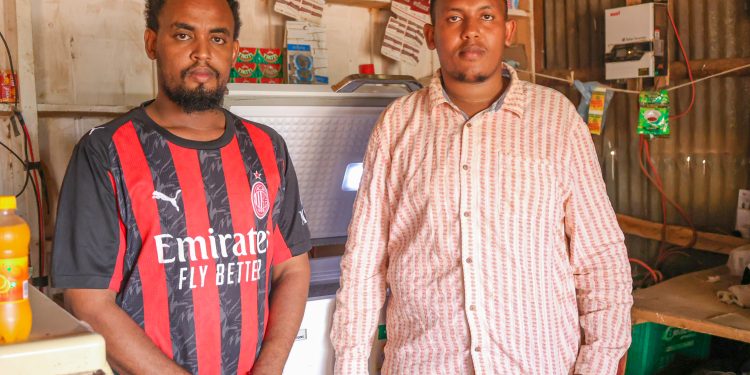
Educational stability didn’t just change Abdiaziz’s academic trajectory; it changed his economic behavior. In his first quarter on the scholarship, he used the stability it provided to launch a small chips business, creating a new, independent stream of income for his family beyond what aid or a teaching stipend could offer.
HIGHLIGHT — Quarter 1 Milestone: A refugee student launches a small enterprise — turning scholarship-driven stability into a functioning household income source, not just an academic credential.
From Enterprise to Shelter: Building Lasting Security
Building on that early momentum, Abdiaziz reached an even larger milestone the following quarter: constructing a house for his family. For a household that had lived with inadequate shelter for years, this was not a cosmetic improvement — it was a foundational shift in security, dignity, and daily quality of life.
HIGHLIGHT — Quarter 2 Milestone: A permanent family home, built through income generated after a single scholarship — converting educational investment directly into physical, lasting household asset.
This is the kind of outcome that rarely shows up in a scholarship’s official metrics, yet it may be one of its most durable results: a family moved from precarious shelter to a secure home, a shift that will outlast any single academic term.
Multiplying the Return: From Personal Gain to Community Model
Abdiaziz hasn’t kept this trajectory to himself. He now regularly shares business ideas with other young people in the camp and encourages them to pursue education alongside small income-generating ventures of their own. Having lived the transformation firsthand, he has become a visible example that circumstances of birth or displacement do not have to dictate a young person’s ceiling.
HIGHLIGHT — Ripple Effect: One scholarship recipient is now an informal mentor and economic role model for other displaced youth — extending the investment’s reach well past the original beneficiary.
Why This Matters for Development Partners
Abdiaziz’s story maps a clean, traceable chain of returns: an educational investment removed a financial barrier; that stability enabled entrepreneurship; that entrepreneurship funded a durable household asset; and the resulting example is now shaping the ambitions of other young people in the camp.
This is the case for treating refugee education financing as economic development, not only humanitarian support. The value created didn’t stop at a diploma — it flowed into a small business, a family home, and a community narrative that education and enterprise are within reach. For funders assessing where an investment compounds rather than simply spends, that chain — from classroom, to business, to home, to community influence — is the evidence worth funding again.