Advancing Inclusive Higher Education and Agricultural Innovation: The Role of the University of Dar es Salaam in Supporting Refugees and Displaced Communities
By Dr. Innocensia John
Department of Agricultural Economics and Business, University of Dar es Salaam, Dar es Salaam, Tanzania. Email: innocensia@udsm.ac.tz
Introduction
Forced displacement has reached unprecedented levels worldwide, driven by armed conflict, climate change, political instability, environmental degradation, trafficking, and socio-economic crises. According to the United Nations High Commissioner for Refugees (UNHCR), more than 120 million people are currently forcibly displaced, with a significant proportion hosted in developing countries, especially in Africa. Universities are increasingly recognised as critical institutions for addressing displacement challenges through inclusive education, research, policy engagement, innovation, and capacity building.
In East Africa, displacement continues to pose a major regional challenge. Tanzania has historically hosted refugees from neighbouring countries such as Burundi and the Democratic Republic of Congo, while the broader East African region experiences ongoing mobility associated with conflict, climate stress, and economic vulnerability. In this context, higher education institutions are emerging as important platforms for advancing inclusion, resilience, and sustainable development among displaced populations.
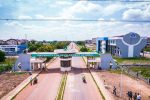
The University of Dar es Salaam (UDSM), Tanzania’s premier public university, is increasingly positioning itself as a regional hub for research, policy dialogue, training, and inclusive academic engagement related to forced displacement. Through multidisciplinary collaborations, regional partnerships, agricultural and food systems research, and targeted academic initiatives, the university contributes to strengthening inclusive approaches that support refugees and displaced communities across East Africa.
Institutional Priorities and Inclusive Higher Education
UDSM’s approach to refugee inclusion is increasingly embedded within broader institutional priorities focusing on equity, regional collaboration, social inclusion, and sustainable development. While the university does not operate a stand-alone refugee university framework, inclusion is increasingly integrated into research programmes, postgraduate training, policy engagement, and regional academic collaborations.
A major institutional platform advancing this agenda is the UDSM Research Chair on Forced Displacement (UDSM-RCFD), led by Prof. Opportuna Kweka from the Department of Geography. The Chair focuses on issues of forced displacement, including climate-induced migration, development-related displacement, and trafficking. Importantly, the Chair adopts a multidisciplinary structure involving scholars from Geography, Sociology, History, Economics, Archaeology, Law, Business, and Agriculture.
The Chair operates across Tanzania, Kenya, Uganda, Rwanda, and Burundi, reflecting the regional nature of displacement dynamics within East Africa. Its activities include:
- conducting interdisciplinary research;
- policy dialogue and dissemination;
- outreach programmes;
- seminars and conferences;
- training young researchers;
- capacity building for Master’s, PhD, and postdoctoral scholars; and
- internship opportunities for graduates interested in displacement-related issues.
Importantly, the Chair prioritizes female students and individuals who have personally experienced forced displacement, demonstrating an intentional effort toward inclusive and equity-oriented academic participation. The university also contributes to specialized academic training through programmes such as the Master’s in Human Displacement and collaborations with the School of Law’s Master’s programme in Refugee Law. These programmes strengthen regional expertise on displacement governance, refugee rights, humanitarian policy, and migration studies.
Global and Regional Partnerships Supporting Refugee Inclusion
UDSM’s work on forced displacement is strongly embedded within regional and global partnerships. The UDSM Research Chair on Forced Displacement is part of a global network of 12 Research Chairs on Forced Displacement coordinated through Carleton University in Canada under support from the International Development Research Centre (IDRC).
The network includes Chairs located across the Global South, including: Tanzania, Burkina Faso, Ethiopia, Ghana, Lebanon, Morocco, Thailand, Mexico, Peru and Dominican Republic. These Chairs collectively promote Global South perspectives on forced displacement and collaborate through international forums that facilitate research exchange, policy dialogue, and dissemination of findings. IDRC Research Chairs on Forced Displacement
The broader objective of the network is to elevate the voices of scholars from the Global South and challenge the dominance of Northern-driven displacement research agendas. According to Prof. Kweka, the initiative strongly promotes localization and decolonization of research by ensuring that displacement scholarship is informed by the lived realities and experiences of affected communities themselves.
This orientation aligns with emerging scholarship advocating South–South cooperation and locally grounded knowledge systems in addressing humanitarian and development challenges. Recent literature emphasizes that Global South institutions possess contextual understanding and practical experience that are often overlooked within traditional Northern-led research frameworks.
UDSM-RCFD also collaborates with: government refugee departments; the East African Community (EAC); NGOs working with refugees and displaced communities; and organizations supporting internships, research partnerships, and outreach activities. These partnerships strengthen both academic and practical engagement with displacement issues while enabling dissemination of research findings across policy and development platforms.
Agriculture, Food Systems, and Rural Development Engagement
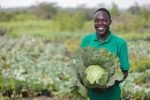
Although displacement studies are often associated primarily with humanitarian or legal dimensions, UDSM-RCFD increasingly recognizes the strong links between displacement, agriculture, food systems, livelihoods, and climate resilience.The inclusion of agriculture within the multidisciplinary structure of the UDSM Research Chair reflects an understanding that many displaced populations in East Africa depend heavily on agriculture and rural livelihoods for survival and integration.
Within UDSM-RCFD, the College of Agriculture and Food Technology (CoAF) contributes to inclusive agricultural development through teaching, research, and outreach activities related to: climate-smart agriculture; food systems resilience; indigenous crops; rural livelihoods; value chain development; and climate adaptation strategies. These areas are particularly relevant for refugee-hosting regions where displaced populations often face: food insecurity; limited access to land and agricultural services; climate vulnerability; and constrained livelihood opportunities.
UDSM-RCFD’s research emphasis on climate change and displacement further highlights the growing relationship between environmental stress and human mobility. Recently, the Chair secured additional funding for a three-year project focusing on climate and displacement, migration and demography, gender and vulnerability, politics, and political economy. This work is highly relevant within East Africa, where climate-related displacement increasingly intersects with agricultural vulnerability and rural poverty. Research on climate mobility is becoming particularly important as droughts, floods, and environmental degradation continue to affect agricultural production systems across the region.
In addition, UDSM’s engagement with indigenous crops and climate-resilient food systems provides opportunities for integrating displaced populations into locally adaptive agricultural systems. Refugees and displaced communities often possess valuable indigenous agricultural knowledge that can contribute positively to local food systems when inclusive support mechanisms are established.
Scholarships, Training Opportunities, and Research Capacity Building
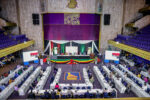
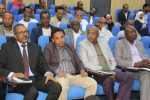
Capacity building forms a central pillar of UDSM’s approach to inclusion. Through the UDSM-RCFD and related academic programmes, the university supports: Master’s and PhD training; postdoctoral research; internships; research mentorship; seminars and conferences; and regional academic networking. The Chair specifically prioritizes women and previously displaced individuals in training opportunities, demonstrating an intentional effort to support vulnerable and underrepresented groups within higher education. The Chair also organizes Research Cafés and dissemination conferences where findings from ongoing projects are shared among scholars, policymakers, practitioners, and development partners.
One particularly innovative initiative is the establishment of the Global South School of Thought on Forced Displacement. Modeled after the Sam Moyo School of Agrarian Studies, the initiative brings together scholars from Africa, Asia, and Latin America through multi-day webinars focused on developing Global South philosophies and perspectives on displacement. This initiative reflects broader efforts to transform knowledge production systems and strengthen Southern intellectual leadership in displacement studies. Emerging literature increasingly emphasizes the importance of decolonizing humanitarian and displacement research by centering local voices, experiences, and institutions.
Research Outputs and Knowledge Dissemination
Since its establishment in July 2022, the UDSM Research Chair on Forced Displacement has generated substantial research outputs.
According to Prof. Kweka:
- multiple reports and publications have already been produced;
- newsletters are published every six months;
- eight individual papers have already been published;
- four additional papers are forthcoming; and
- two books, including a policy-focused volume, are currently under preparation.
One forthcoming book emerging from the first phase of the project is funded by IDRC and implemented in collaboration with Carleton University in Canada.
The Chair’s work contributes to expanding African scholarship on displacement while strengthening evidence-based policymaking at national and regional levels.
Lessons Learned and Recommendations
The experience of UDSM provides several important lessons for universities seeking to strengthen inclusive approaches toward refugees and displaced populations.
- Multidisciplinary approaches are essential
Forced displacement intersects with agriculture, climate change, law, economics, governance, gender, and livelihoods. Universities therefore need multidisciplinary institutional structures capable of addressing these interconnected dimensions.
- Refugees should be integrated into mainstream academic systems
Inclusive higher education is more effective when refugees and displaced persons are integrated into existing programmes rather than isolated within parallel systems. This promotes dignity, inclusion, and long-term sustainability.
- Agriculture and food systems are critical entry points
Agriculture, climate adaptation, and food systems programmes provide practical livelihood pathways for displaced populations, particularly within rural refugee-hosting areas in Africa.
- South–South collaboration strengthens locally relevant solutions
The UDSM experience demonstrates the importance of Global South research networks in producing contextually grounded knowledge and challenging externally imposed research agendas.
- Decolonization and localization of research matter
Research on displacement should not be driven exclusively by donor priorities or Northern institutions. Local scholars and affected communities must play central roles in shaping research agendas, methodologies, and policy recommendations.
- Long-term funding remains necessary
Despite substantial progress, universities still face challenges related to sustainable financing, institutional support, and scaling inclusive programmes. Continued investment from governments and development partners is necessary.
Conclusion
The University of Dar es Salaam exemplifies the transformative role that African universities can assume in supporting refugees and displaced populations through inclusive higher education, research, policy engagement, and regional collaboration. Through initiatives such as the UDSM-RCFD, multidisciplinary academic programs, agricultural and climate research, and partnerships across the Global South, the university contributes to reshaping displacement scholarship and practice from an African perspective. The experience at UDSM underscores that universities serve not only as centres of learning but also as critical institutions for promoting social inclusion, resilience, evidence-based policymaking, and sustainable development among vulnerable populations. As displacement challenges intensify globally, strengthening inclusive higher education systems particularly in agriculture, food systems, and rural development remains essential for achieving equitable and sustainable futures across Africa and the Global South.