The University of Zambia’s Agricultural Research and Collaborative Engagements with RUFORUM
22nd RUFORUM ANNUAL GENERAL MEETING
POSITIONING HIGHER EDUCATION SYSTEMS TO CATALYSE AGRICULTURAL TRANSFORMATION AND SUSTAINABLE DEVELOPMENT
By the University of Zambia
INTRODUCTION
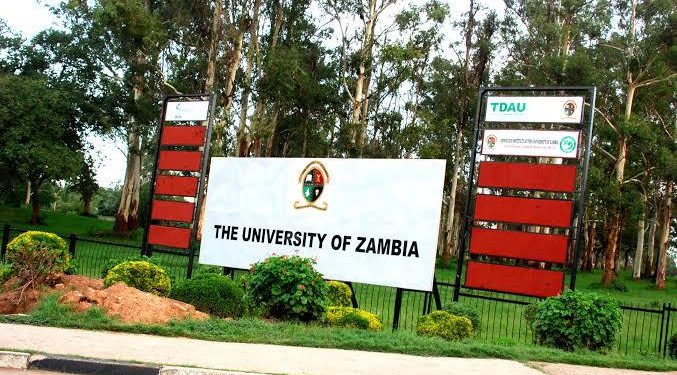
The University of Zambia (UNZA) was established by Act of Parliament No. 66 of 1965. The University was officially opened in 1966 when its first intake of undergraduate students were enrolled. It is the oldest and leading university in Zambia. UNZA is situated in Lusaka on two campuses. The main campus is the Great East Road Campus and it is situated on the Great East Road, 6km from the town center. The other campus is the Ridgeway Campus catering for the Medical School. It is situated on John Mbita Road, 4km South East of Lusaka, opposite the University Teaching Hospital.
Over the years, UNZA has been guided by a successive 5-year strategic plan. The current University of Zambia Strategic Plan 2023-2027, informed by its motto of service and excellence, is aimed at repositioning the University into a world-class institution driven by excellence in teaching, research, community service, innovation, and industrialisation with a sound financial position. The strategic plan emphasises enhanced postgraduate training, research, innovation and publication, open and distance learning. furthermore, the strategic plan aligns with the national developmental frameworks such as the Vision 2030 and 8th National Development Plan, as well the continental and global frameworks including the African Agenda 2063: The Africa We Want, and the Sustainable Development Goals (SDGs).
In pursuit of the vision and mission, the University focus on five strategic objectives, whose Key Result Areas (KRAs) include teaching and learning, research, innovation and publishing, entrepreneurship and enterprise development, community engagement, recreation and wellness, social responsiveness, communication and marketing, internationalisation and partnerships, digital and physical infrastructure, financial sustainability, management support functions, quality Assurance, Occupational safety and health, and environmental management.
SCHOOLS AND UNITS OF THE UNIVERSITY OF ZAMBIA
Over the past 60 years, UNZA has grown to provide a wide array of undergraduate and postgraduate programmes across disciplines like medicine, engineering, humanities, law, agriculture, and business. Currently, the university has over 30,000 students pursuing various undergraduate and postgraduate programmes. The University has 13 Teaching Units (Schools), four (4) Directorates, two (2) Technology Centres and two (2) Institutes. The Schools consist of Agricultural Sciences, Education, Engineering, Graduate School of Business, Health Sciences, Humanities & Social Sciences, Law, Medicine, Mines, Natural and Applied Sciences, Nursing Sciences, Public Health and Veterinary Medicine. To implement the research and innovation mandate, UNZA has three (3) Research Directorates, namely, Collaborative Research Hub for Multidisciplinary Advancement (CRHMA), Research and Development (R&D) and Innovation, Technology Transfer and Commercialization (DITTC).
The School of Agriculture was established in 1971 and has grown to house five (5) Departments, namely, Agricultural Economics and Extension Education, Animal Science, Food Science and Nutrition, Land Management and Plant Science. Under these departments, the School offers undergraduate majors of five-year duration leading to a Degree of Bachelor of Agricultural Sciences including: Agricultural Economics, Agricultural Extension, Animal Science, Plant Science and Land Management. Additionally, the School offers Bachelor of Food Science and Technology, and Bachelor in Human Nutrition.
At postgraduate level, the School offers Masters and Doctor of Philosophy degrees in integrated soil fertility management, agronomy (soils), agronomy (crops), agricultural economics, animal science (breeding & genetics), animal science (nutrition), plant breeding & seed systems, human nutrition, food science & technology, sustainable land and environmental management, post graduate diploma in sustainable land and environmental management.
AGRICULTURAL AND RELATED RESEAECH AT UNZA
The University of Zambia undertakes various agricultural and related research that align with the theme of the 2026 RUFORUM AGM “Translating higher agricultural education, innovation, and research into action for Africa’s agricultural transformation and development.” Specifically, the Land Management Department has been researching on soil nutrient and water use efficiency, organic resource management to build soil fertility, the impact of climate change on crop production, strengthening capacity in environmental physics, hydrology and statistics for Conservation Agriculture (CA) research, soil amendments for small scale farmers, development of bio-fertilizers using indigenous microorganisms and soil mapping. With regard to crop production and improvement, the Department of Plant Science has been involved in research on the development of cereals & legumes through induced mutations, climate change adaptation strategies, traditional or indigenous vegetables focusing on productivity and postharvest handling, and CA. The Department of Animal Science has been working on pasture and fodder crops, feed formulation from local resources, village chicken characterization & productivity, while the Department of Food Science and Nutrition has been focusing on understanding & promoting dietary diversity, non-alcoholic traditional fermented foods, aquaculture for food and nutrition security, food product development, and food loss & waste management. Lastly, the Department of Agricultural Economics & Extension Education has been researching on crop and livestock value chains, land use and] rural livelihoods, and farmer adaptation to climate change.
In addition, other Schools in the University such as the School of Natural and Applied Sciences, Mines and Engineering to site a few, have been conducting research with an agricultural related focus and impact. In this regard, School of Natural and Applied Sciences has been conducting research in remote sensing for agriculture, climate and hydrology, pollution and water quality and nutrition linkages. The School of Engineering has been conducting agricultural related research that delivers engineering solutions for resilient agri-food systems through water management, renewable energy, transport and materials research. Priority research areas for the School has been water and sanitation, energy, and transport which directly supports Zambia’s 8NDP goals. The School of Mines has been advancing research in phyto-remediation and bioenergy production to address soil pollution by heavy metals from mining areas.
With this backdrop, it is clear that UNZA is delivering research that connects soils, climate, crops, livestock, nutrition and markets — which aligns with the 2026 RUFORUM AGM theme as well as Zambia’s Vision 2030 and the RUFORUM goal of resilient, inclusive agri-food systems in Africa. Therefore, UNZA is positioned to move from being Zambia’s “flagship university” to being the regional hub for sustainable development research in the next 5-10 years.
COLLABORATION AND SCHOLARSHIP
The University of Zambia has over the years has collaborated with the RUFORUM Secretariat and some of its member universities to implement research projects such as the SENTINEL project which supported four (4) doctoral Zambian students; AgriENGAGE which has supported problem-based learning (PBL) for staff and students at UNZA; Accelerating Impacts of CGIAR Climate Research for Africa (AICCRA) Project which supported a preliminary evidence for the integration of climate smart agriculture and climate information services into Zambian Higher Education curriculum and the development of seven (7) training modules; Capacity Development for the exploitation of energy resources in Africa (CDERA); Sharing Capacity to Build Capacity for Quality Graduate Training in Agriculture in African Universities (SHARE) which offered four (4) MSc and one (1) PhD scholarships for Zambian agricultural professionals.
Further, UNZA and RUFORUM have jointly implemented the Carnegie of New York Post-doctoral Fellowships for two (2) Zambian female agricultural professionals. Another six (6) PhD and Masters scholarships were offered to Zambians at various RUFORUM member universities. Lastly, the University of Zambia has benefited from various RUFORUM programmes such as the Graduate Teaching Assistantships (GTA) and skills enhancement training programmmes.