Transitioning Higher Education Regulators and Universities to Competency-Based Education in East and West Africa
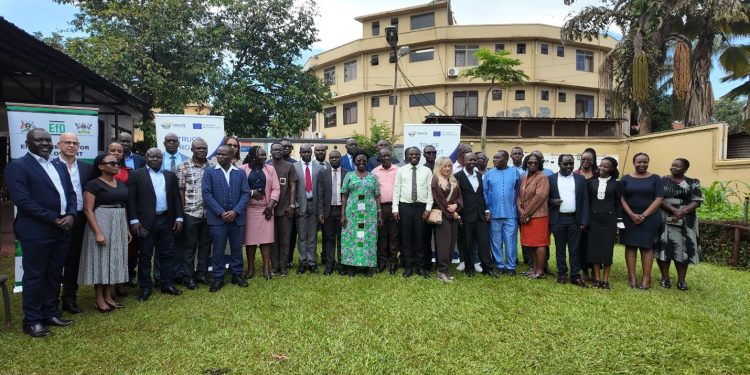
TRUCE Inception Meeting Charts Roadmap for Competency-Based Higher Education in East and West Africa to drive skills transformation.
8–9 April 2026, Jinja, Uganda: The inception meeting for the Erasmus+ Capacity Building in Higher Education project, “Transitioning Higher Education Regulators and Universities to Competency-Based Education in East and West Africa (TRUCE),” established a shared understanding and a strategic roadmap for transitioning higher education systems in Uganda and Ghana toward Competency-Based Education (CBE).
Makerere University (Uganda), together with Mountains of the Moon University (Uganda), University of Ghana, Legon (Ghana), University of Education, Winneba (Ghana), Universitat de Barcelona (Spain), Instituto Politécnico do Porto (Portugal), the National Council for Higher Education of Uganda (Uganda), the Ghana Tertiary Education Commission (Ghana), and RUFORUM, form the implementing consortium. The project will run from 1 December 2025 to 30 November 2029.
The consortium reaffirmed that the TRUCE project will work towards;
- Accelerating the adoption of Competency-Based Education (CBE) to equip graduates with the required 21st century skills;
- Use CBE as a pathway to enhance employability and job creation; and
- Pilot the implementation in Ghana and Uganda , and establish a successful framework for scaling across Africa.
A key insight from previous Erasmus+ experiences was that education regulators had been under-engaged, and their inclusion is now central to accelerating CBE reforms.
Participants engaging eachother
Deliberations among consortium members highlighted that the challenge is not a lack of ideas but a lack of coherence. Universities interpret CBE differently, regulators define it cautiously, and industry demands it urgently, often leading to blurred meaning across these perspectives. As a result, the first milestone on this roadmap is not simply implementation, but building a shared understanding of what CBE entails, as a method and a philosophy. Without collective consensus, efforts risk remaining isolated experiments.
Attention then turned towards integration. Uganda already has a national CBE framework developed by the National Council for Higher Education, which now requires integration into university programmes. Existing initiatives, such as the Transforming African Agricultural Universities to Meaningfully Contribute to Africa’s Growth and Development (TAGDev) and AgrCBE, provide a foundation, but frameworks must be contextualized and domesticated for each institution. Ghana’s regulatory approach, which emphasizes mandatory evidence of industry partnerships, offers a useful model for benchmarking. The consortium agreed that TRUCE must develop a clear integration strategy aligned with national policies and institutional mandates.
A phased, evidence-based implementation approach was adopted, beginning with situational analyses in pilot institutions, including Makerere University and Mountains of the Moon University. The consortium emphasized embedding CBE within the core functions of universities rather than treating it as a parallel initiative, and developing flexible pathways for adoption across disciplines, including theoretical fields.
To accelerate implementation, partners will benchmark existing tools and frameworks, particularly from the ABC Blended Learning project, review guidelines from Ghana, Uganda and partner institutions such as the University of Barcelona, and promote cross-learning between the African and European partners.
Key operational decisions included the establishment of a Project Management Team (PMT) and Project Advisory Board (PAB), confirmation of local coordinators at each institution, agreement on quality assurance systems, indicators, reporting and communication processes, and the adoption of a yearly workplan.

Participants working on the roadmap
The meeting successfully transitioned the TRUCE project from concept to coordinated action, establishing shared understanding, assigning roles, and defining practical steps toward implementing CBE. However, success will depend on achieving conceptual clarity and policy alignment, strengthening industry and regulatory engagement, and ensuring contextualized, phased implementation within pilot universities.
This roadmap marks the beginning of a different kind of conversation, one in which education is no longer measured solely by the qualification gained, but by what becomes possible after learning ends.