READINESS PREPARATION OF JUNIOR SCIENTISTS: ZAMBIA AND AFRICA
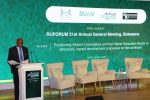
22nd RUFORUM PRE ANNUAL GENERAL MEETING (AGM)
CONCEPT NOTE
READINESS PREPARATION OF JUNIOR SCIENTISTS: ZAMBIA AND AFRICA
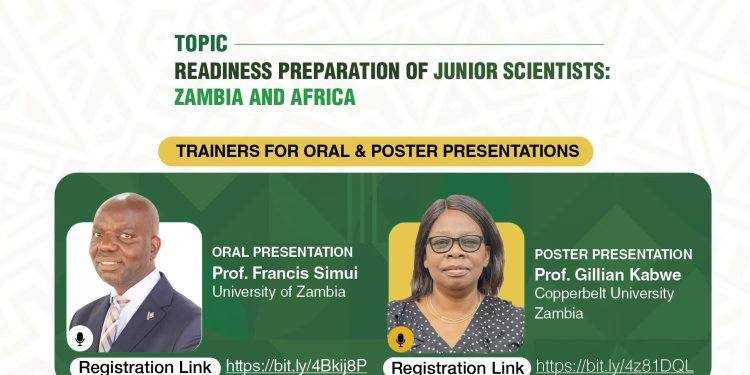
Webinar Orals Registration Link: https://bit.ly/4Bkij8P
Webinar Posters Registration Link: https://bit.ly/4z81DQL
Date: Monday 9th November, 14:00–17:00 CAT
Venue: Virtual
Contacts: Dr. Runyararo Jolyn Rukarwa (r.rukarwa@ruforum.org)
Professor Majaliwa Mwanjalolo (m.majaliwa@ruforum.org)
Facilitators:
- Scientific Presentations and PowerPoint Development: Professor Francis Simui, Assistant Director of postgraduate studies, Institute of Distance Education, University of Zambia.
francis.simui@unza.ac.zm; simuifrancis@gmail.com
2. Scientific Poster Development: Professor Gillian Kabwe, Forestry and Environmental Management, Copperbelt University, Zambia.
BACKGROUND
Clear scientific communication helps to explain why research matters, present evidence accurately and engage audiences in meaningful discussion. Oral presentations and research posters require organising a clear message of the main findings and using visuals that support understanding. For students, this needs practice in turning a thesis or research report into a concise presentation suited to a conference audience.
As part of the RUFORUM Pre-AGM activities in Zambia, this three-hour training will support MSc and PhD students to prepare and improve their PowerPoint and scientific posters presentations. The training will combine demonstrations, guided preparation and peer feedback, using participants’ own research. Two parallel sessions will allow students to focus on the communication format most relevant to their immediate needs.
MAIN OBJECTIVES
To strengthen the ability of MSc and PhD students to communicate research clearly, accurately and confidently through oral presentations and scientific posters.
SPECIFIC OBJECTIVES
- Organise research into a clear narrative with a focused message and logical flow.
- Develop readable and visually effective PowerPoint slides or a scientific poster.
- Present data accurately using appropriate charts, tables and images.
- Practice delivery, time management and responses to audience questions.
- Use feedback to improve a draft presentation or poster.
OUTCOMES
- Improved ability to explain research clearly and present evidence accurately.
- Greater confidence in oral delivery, poster discussion and responding to questions.
- Better preparation of MSc and PhD students for scientific conferences and research dissemination.
PREPARATION AND DELIVERY ARRANGEMENTS
- Participants should submit research abstract and, where available, a draft slide deck or poster before training; bring key findings, charts, images and any relevant conference instructions.
- Participants should have a computer with PowerPoint or another suitable presentation or poster design application. Templates and examples should be shared beforehand for offline use.
EVALUATION AND FOLLOW-UP
At the start, participants will identify one communication challenge. At closing, they will assess their learning and review their draft against a short checklist covering message, structure, accuracy, readability and delivery. Participants will be allowed to submit, after two days, revised products before their presentations. RUFORUM will collate participation, submitted products and feedback to guide further support.
TARGET PARTICIPANTS AND TRAINING APPROACH
The training targets MSc and PhD students preparing to present their research, particularly those participating in the RUFORUM AGM. Students will select one session during registration. Those with preliminary findings may participate, provided the status and limitations of their evidence are clearly stated.
Delivery will prioritise short demonstrations, guided work on students’ own materials and feedback in small groups. Participants will leave with a revised draft and an action plan for final preparation. The three-hour session is an initial skills clinic, supported by preparation beforehand and follow-up review.
OFFICIAL OPENING CEREMONY
Master of Ceremony: Professor Majaliwa J.G. Mwanjalolo
| Time (CAT) | Official Opening
|
|
| 13:30–13:50 | Welcome Remarks | Dr. Florence Nakayiwa, Deputy Executive Secretary, RUFORUM |
| Welcome Remarks | Professor Imasiku Nyambe, Vice Chancellor, Copperbelt University | |
| Welcome Remarks | Professor Martha Nickanor, Chair of the Principals and Deans Committee | |
TRAINING PROGRAMME (Two Parallel Sessions)
| Time (CAT) |
Session 1: Scientific Presentations and PowerPoint Development Registration link: https://bit.ly/4Bkij8P Rapporteur: Yamungu Alongo |
Session 2: Scientific Poster Development Registration link: https://bit.ly/4z81DQL Rapporteur: Artur Fernando |
| 14:00–14:30 | Structuring a scientific talk: audience, key message, research problem, objectives, brief methods, main findings and implications. | Selecting poster content: audience, central message, concise title, research question, methods, key results, conclusions, acknowledgements and contact details. |
| 14:30–14:50 | PowerPoint design: storyboard, logical slide sequence, clear slide titles, readable fonts, contrast and balanced use of text and visuals. | Poster design: page size and orientation according to conference guidance; clear reading order, headings, columns, readable text, colour and white space. |
| 14:50–15:10 | Presenting evidence: simplify charts and tables, label units, show uncertainty where relevant, use images responsibly and acknowledge sources. | Visualising results: select a few strong figures, simplify tables, write clear captions, label units and use suitable image quality and source credits. |
| 15:10–15:20 | Short break | |
| 15:20–16:00 | Guided PowerPoint clinic: create or improve a short draft deck using participants’ own research; facilitator feedback on clarity and flow. | Guided poster clinic: create or improve a draft poster using participants’ own research; facilitator feedback on content, layout and visual balance. |
| 16:00–16:50 |
Revision of the scientific presentation practice: Randomly selection of students for three-minute talks, brief questions and peer feedback on clarity, voice, pace, timing and responses. Revision and technical checks: improve slides, rehearse timing, check fonts and media, and save editable and PDF versions. |
Revision of the scientific poster presentation: Randomly selection of students for two-minute poster pitches, questions and peer feedback on the main message, visual navigation and explanation of findings. Revision and export: refine text and figures, check alignment and readability, and export a PDF at the required poster size while retaining the editable file. |
| 16:50–17:00 | Closing by the facilitators and the RUFORUM staff: Submit draft products (Oral PowerPoint or Poster), complete a brief evaluation and agree next steps. | |
- The two training sessions run simultaneously; each student attends one.
- Practice takes place in small groups so all participants can receive feedback.
- The size and timing of final AGM presentations and posters will follow the organisers’ official guidance.