Prof. Miriam Kinyua: Giving Confidence to Gain an Equitable Future
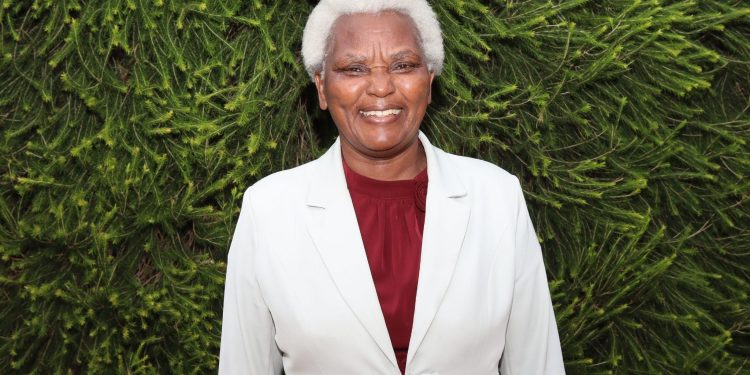
Professor Miriam Kinyua is an esteemed Kenyan agricultural scientist and academician, presently serving as a Professor of Plant Breeding and Biotechnology at the School of Agriculture and Biotechnology, University of Eldoret. Her specialization encompasses the advancement of crop varieties through plant breeding and biotechnology techniques, with an emphasis on creating enhanced and climate-resilient crop varieties that support food security and facilitate sustainable agricultural development.
With a wealth of experience in research, teaching, and mentorship, she expertly oversees Master’s and Doctorate students while guiding budding scientists to pursue careers in both science and leadership. Her significant contributions to agricultural research and innovation have earned her widespread recognition on national and international platforms, reflecting her steadfast dedication to advancing the frontiers of science, empowering the next generation of researchers, and championing equitable access in STEM disciplines.
In this article, we pay tribute to Prof. Miriam Kinyua, in celebration of International Women’s Day 2026, which embraces the theme ‘Give to Gain.” This inspiring call to action aims to foster gender equality by encouraging a culture of generous and abundant giving. When individuals, organizations, and communities engage in acts of kindness, it significantly amplifies the opportunities and support available to women.
To build a truly equitable and sustainably developed world, what mentorship do women require, and what knowledge are you prepared to give to gain it?
Prof. Miriam Kinyua
To build a truly equitable and sustainably developed world, women need mentorship that recognizes equitability, not merely equality, as the foundation of progress. According to Prof. Miriam Kinyua, mentorship must focus on empowering women with what they need to thrive, rather than offering uniform opportunities that ignore existing barriers.
For Prof. Kinyua, equitability means ensuring women are not denied opportunities simply because they are women. She believes sustainability becomes achievable when individuals are allowed to contribute fully based on knowledge, competence, and capability rather than gender.
The mentorship women need, she explains, is rooted in confidence grounded in competence and self-awareness. Throughout her career as a scientist, lecturer, researcher, mother, and wife, she has observed that many young women hesitate to pursue leadership or scientific careers because society has genderized roles that are inherently gender-neutral.
“Science is gender-neutral,” she emphasizes. “It is society that genderizes positions.”
Through mentorship, she encourages young women to view science, leadership, and administration as spaces open to everyone. Her message is clear: mastery of one’s field is the strongest source of confidence. Once a woman understands her discipline, her knowledge should speak louder than stereotypes.
Equally crucial, she teaches that personal growth begins with a candid acknowledgment of what one does not comprehend; you don’t know. Instead of approaching these gaps in knowledge with anxiety, women should view them as valuable opportunities to learn, actively pursue answers, and enhance their expertise. This mindset, she believes, helps dismantle internalized doubt and promotes a heightened sense of self-awareness.
Prof. Kinyua emphasizes the importance of mentorship that empowers women to navigate and strategically manage their environments. While societal biases may still exist, she focuses on preparing younger women with resilience, practical wisdom, and the ability to navigate challenges without losing confidence or purpose.
“We faced challenges and learned how to manage them,” she reflects. “That is what we must help younger women to do.”
In the spirit of this year’s global theme, “Give to Gain,” the knowledge she is prepared to give is confidence, perspective, and practical guidance drawn from experience. By giving belief and mentorship to emerging women scientists and leaders, she gains something greater: a generation that sees opportunity instead of limitation.
Just as improved crop varieties lead to stronger harvests, Prof. Kinyua believes empowered women cultivate stronger, more sustainable societies. Giving confidence today, she says, is how the world gains equity and sustainability tomorrow.