Towards self-reliance: TAGDev 2.0 rolls out skills training at Tongogara Refugee Settlement
By Tawanda Chiwara, TAGDev 2.0 Communications Officer, Africa University
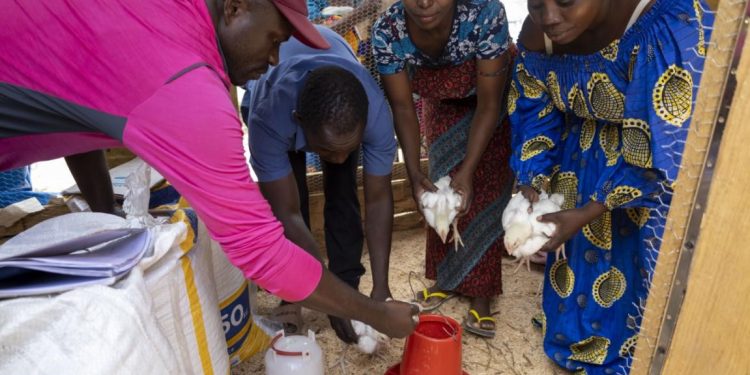
Africa University and its partners recently helped ignite a spirit of renewal at Tongogara Refugee Settlement, spearheading hands-on skills training sessions in poultry, mushroom, and rabbit farming to build pathways towards self-reliance and food security for the refugee community.
With technical and financial support from the Transforming African Agricultural Universities to Meaningfully Contribute to Africa’s Growth and Development (TAGDev 2.0) programme, a partnership between the Regional Universities Forum for Capacity Building in Agriculture (RUFORUM) and the Mastercard Foundation, the initiative, led by Africa University and its local consortium of partners, is empowering young women and men by facilitating the creation of decent work opportunities and practical agricultural skills training that promise to improve household nutrition and income opportunities in the months ahead.
Mr. Johanne Mhlanga the settlement’s Administrator, said the training was very critical for the well-being of the refugee community as it went a long way in restoring hope and financial independence for these families.
“Well, the TAGDev 2.0 interventions by Africa University and it’s partners are going to equip the refugees with skills that are relevant to the modern world and also skills that are actually very popular within the refugee community. These interventions will empower the refugee community, in particular youth, the girl child, women, among others, to ensure that they participate in the broad economic activities,” he said.

Tongogara Refugee Settlement administrator, Mr. Johanne Mhlanga
He added that at the 2023 Global Refugee Forum, the government of Zimbabwe committed to enhance and promote access to vocational training for refugees, as well as the host community members, as such the program is part of broader government priorities to strengthen food security and diversify livelihood options for refugees, many of whom rely on food assistance.
The Community Organisation for Poverty Alleviation in Zimbabwe, which provided the venue for the training, has also played a supportive role in safeguarding the training materials within the settlement. Their contribution has ensured that all resources remain secure and accessible throughout the sessions, strengthening the delivery and continuity of the programme.
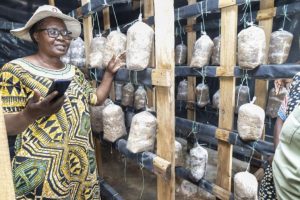
Mushroom farming expert Mrs Sithembile Tsoro
Africa University staffer and seasoned mushroom farming expert, Mrs Sithembile Tsoro believes with the skills learned so far by three female participants in her group are destined for greatness in the are of trade.
“I taught them three methods of sterilizing the substrate and they are doing exceptionally well,” she said.
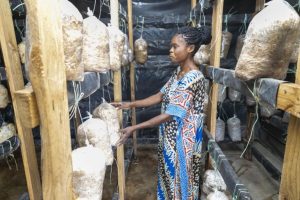
Ms Mariamu Matimbu from the Democratic Republic of Congo is one of the mushroom farming trainees at Tongogara Refugee Settlement
For 27-year old Ms Mariamu Matimbu, from the Democratic Republic of Congo, the methods are far much better and easier than what they were previously used to.
“This is very nice, it’s very good. Yes, the way we were told that we can work substrate with Sunlight liquid and also with the lime, it was very easy for us because before … it was taking time and it was a lot of work for us. So, this is very easy, thank you so much,” she said.
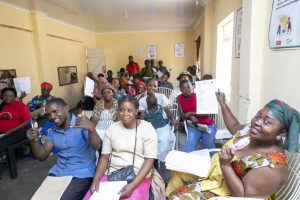
Agricultural trainer Mr Lazarus Kabaira capacitated a group of 55 from the settlement covering 18 males, 37 females between the ages of 18-35 with the essentials of poultry and rabbit farming.
To ensure that everyone followed along, sessions used a combination of practical demonstrations, visual charts, and simple vernacular explanations, thanks to translators like Mr. Emmanuel Tshite Kitunda, who were ever-present in the sessions.
“The idea is to make learning accessible to everyone, regardless of literacy level. People were taking notes, comparing methods, and thinking about how they’ll apply this knowledge when the practical phase starts,” Mr. Kitunda said.
For many participants, this training has been a major shift in knowledge. Ms. Salama Gasanga, a 30-year old mother from the Democratic Republic of Congo, shared: “I now have the skills and confidence to vaccinate and medicate chickens properly. I’ve also learned how to raise them and categorize them according to their age. I truly appreciate this training because it has brought a meaningful change in my life, both now and for the future. I’ve gained not only theoretical knowledge but also practical skills that will help me manage not only poultry but rabbit projects effectively as well,” she said.
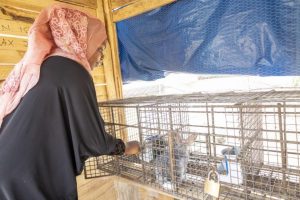
Ms Salama Gasanga tends to some rabbits at the settlement during the training
While the full impact will unfold over time, what’s already evident is the transformation in mindset for the refugees at Tongogara.
“What motivated me to join this training was the desire to learn something practical that could help me support myself. I wanted to be able to assist my family and contribute to the wider community. With the skills and experience I’ve gained, I believe this will open new opportunities and be truly profitable. We now need to take these skills forward and start something of our own,” Ms. Elizabeth Shamamba said.
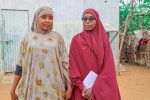
Ms Elizabeth Shamamba, right, poses for a picture with the other trainees at Tongogara Refugee Settlement
With the quest being to empower the refugee community with skills that open up decent work opportunities to enable them to take part in broader economic activities to improve their livelihood, the TAGDev 2.0 program answered the call as Africa University and its partners take turns to impart life-transforming skills training for the community.
So far all the signs are pointing towards the right direction.
“When I left the Democratic Republic of Congo, I didn’t have any knowledge or skills related to poultry farming. Through this training, we have received valuable information. I now understand the correct time frames, conditions, and procedures for managing and even slaughtering poultry safely. This has greatly improved my confidence and competence in the field. What makes this even more special is that the impact is not just personal; it’s being felt by many refugees across the camp. This initiative is truly a lifeline for us, and we hope it will continue and reach even more people in the future,” 33-year old, Ms. Anna Kiza said.