Sarah Kizza: What was once a deferred dream turned into a catalyst of opportunity
By Evaline Acan
Growing up in Jinja, Uganda, Kizza Sarah never imagined that one day she would become both a professional and promising entrepreneur in the agricultural sector. As the youngest of seven children, her family often faced financial hurdles that threatened her chances of furthering her studies.
“After I finished secondary school through bursaries, my mother told me she could not afford to pay for my university education,” Sarah recalls. For a moment, it seemed as though her academic journey had come to an abrupt end.
Determined, Sarah took up a job as a primary school teacher during the holidays after completing secondary school. Her plan was to save every shilling she could get in order to travel to the Middle East to work as a maid.
But just as she was preparing to leave the country to unfamiliar terrains, an unexpected opportunity came through. A former classmate introduced her to the Transforming African Agricultural Universities to Meaningfully Contribute to Africa’s Growth and Development (TAGDev) scholarship programme, implemented by the Regional Universities Forum for Capacity Building in Agriculture (RUFORUM) in partnership with the Mastercard Foundation.
In the 2019/2020 academic year, Sarah received a fully funded scholarship to pursue a Bachelor of Science in Food and Agribusiness at Gulu University – A lifeline to further her studies.
The scholarship included a monthly stipend, which Sarah managed carefully. Instead of spending it all, she began saving part of it. In 2022, she invested those savings in learning makeup artistry and wig-making, the skills she had long been passionate about because she enjoyed helping women look beautiful on a budget
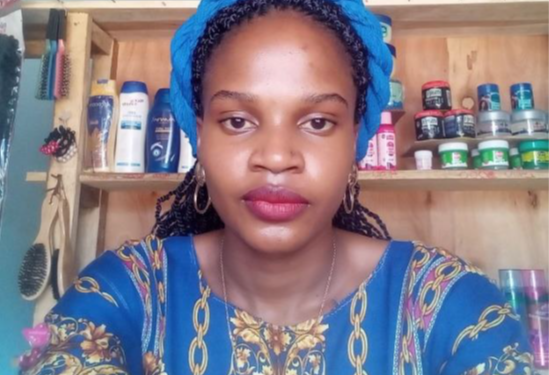
By 2023, Sarah had opened a small cosmetics shop in Gulu City that sold perfumes, jewelry, synthetic hair extensions, and women’s hair accessories while also offering makeup and wig-making services. Because she was still studying at the time, she hired a shop attendant to manage the store, and the business quickly began to grow.
When Sarah graduated in January 2024, she decided to run the cosmetics business full-time. Yet deep inside, she still felt a strong pull toward building a career in the field she had studied. She began applying for jobs related to food science and agribusiness while continuing to run her business.
In January 2025, Sarah received a job offer from Asili Agriculture as a Quality Controller at the Amuru–Kilak branch in Northern Uganda. The opportunity meant relocating and starting life in a rural area. To balance both ventures, she moved her cosmetics business from Gulu City to Soroti, placing it under the management of her elder sister.
The new job, however, came with its own challenges. “At first I felt demotivated,” Sarah admits. “At my work place, four to six adults shared a small grass-thatched house, and it was located deep in the village.”
But as she settled into the community, her perspective began to change. What initially looked like a hardship soon revealed itself as an opportunity.
Through the practical training and exposure visits she had received during the TAGDev programme, Sarah had learned about agricultural enterprises and farm management. Surrounded by fertile land and affordable production costs, she realized she could finally put that knowledge into practice.
She started on two acres of soybeans. The harvest exceeded her expectations. Encouraged by the results, Sarah expanded her farming activities the following season to five acres of soybeans and groundnuts, which also produced good yields. Now, she plans to expand even further in the 2026 season.
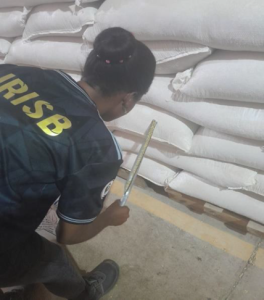
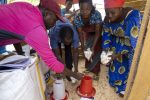
Sampling soybean in the warehouse to do quality analysis on grains at the store
Today, Sarah balances multiple roles: a dedicated quality controller, an entrepreneur, and a growing farmer. Her commitment to excellence has not gone unnoticed. Within her first year of employment, her employers recognized her hard work and awarded her a promotion.
Beyond personal success, Sarah is also making an impact in her community. Through her farming activities, she occasionally employs local youth to help with planting, weeding, and harvesting which have enabled her to continue creating small but meaningful economic opportunities.
Looking back, Sarah sees a journey defined not by obstacles but by resilience. “With determination, I learned to focus on my long-term goals rather than the challenges along the way,” she says.
Today, she remains deeply grateful to RUFORUM, the Mastercard Foundation, TAGDev programme, and Gulu University for providing the foundation that transformed her life.