Leadership for Science: From Doctoral Education to National Science Leadership
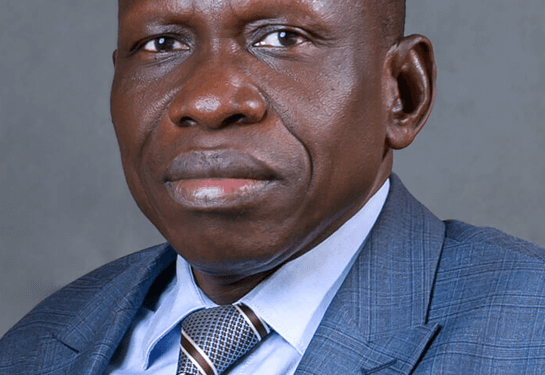
Dr. Sadik Kassim
National Agricultural Research Organisation, Uganda
Discussant during a Plenary Session on Nurturing talent, RUFORUM AGM
3rd December 2025, Gaborone, Botswana
Introduction
I am happy to participate at RUFORUM’s 21st Annual General meeting held under the theme ‘’Positioning Africa’s Universities and the Higher Education Sector to effectively impact development processes on the continent’’. I am particularly pleased to be a discussant during the plenary session on the theme ‘’Leadership for Science’’ and focusing on the topic, From Doctoral Education to National Science Leadership. I ought to share my experiences and career shaped by RUFORUM as an alumnus. These testimonies are aimed to pass a message to young scientists, inspire university leaders especially graduate program designers on nurturing science talent and also provide feedback to RUFORUM as a leading facilitator of quality higher education in Africa.
Brief about NARO
NARO is an agency of the Ministry of Agriculture, Animal Industry and Fisheries (MAAIF) mandated to coordinate, oversee and guide agricultural research in Uganda. Its mission is to innovate for sustainable agricultural transformation. To realize this, NARO conducts research in all aspects of agriculture including crops, livestock, fish, forestry and cross cutting areas through 16 Public Agricultural Research Institutes (PARIs) located across the country. NARO’s goal is to enhance Agricultural productivity and production, commercialization and agro-industrialization through generating and promoting innovations, research technologies, products and services. NARO is a robust science institution with 57 innovative agricultural research programs anchored at its 16 PARIs which play a greater and pivotal role in providing scientific solutions to emerging and re-emerging challenges in agricultural sector and contributing to socio-economic development. It has a staff establishment of 1242 (762 filled out of which over 150 are PhD holders).
My Journey to Leadership in NARO as Deputy Director General soon after PhD graduation
As an alumnus of RUFORUM who graduated with a PhD in Plant Breeding & Biotechnology, MSc. in Crop Science and BSc. in Agriculture all from Makerere University (Africa), barely in less than two years of the PhD graduation (January 2014), I unprecedentedly vied and got appointed as Director of Research in NARO (August 2015) and in 5 years period again competed and rose to the position of Deputy Director General (2020). Since then, I have impactfully managed a number of research and development projects under funding from the government of Uganda and Development partners including World Bank, Islamic Development Bank and FAO among others. I have also effectively served on several technical committees, taskforces and boards within and outside NARO. For instance, member of the board of the defunct Uganda Coffee Development Authority, Member of Council of Muni University, Board chairperson of Community Empowerment for Rural Development (CEFORD), a not-for-profit NGO operating in Uganda, Co-Founder and Board member of PALM Corps, a not-for-Profit NGO operating mainly in northern Uganda, among others.
What it takes to become a Director of Research in NARO
To inspire young scientists and also demonstrate the strength of RUFORUM supported programs in producing science leaders, I would like to broadly state the minimum requirements for position of DOR in NARO which include, A PhD in agricultural sciences, natural sciences or related fields with at least 20 publications in peer reviewed journals and a sound track record in resource mobilization among others. The key competencies include: strategic thinking, collaboration and teamwork, communication and stakeholder engagement, problem solving and adaptability, technical expertise and staying updated, leadership and ability to mentor others, and critical thinking and analytical skills, etc. A DOR is required to use 25% of his/her time in conducting research and 75% in management and supervision of all research projects/activities in the institute. So, the above competencies help him/her in driving innovation, guiding teams as well as making impactful decisions. With well designed and delivered graduate programs, it is possible for young scientists to meet these requirements as early as possible.
What RUFORUM supported graduate programs have provided
I wrote several articles on the strength of the RUFORUM supported programs and published in some of her monthly articles of 2009 and 2010. I am happy to note that RUFORUM has maintained quality of graduate training on the continent and encouraged and or championed among others:
- Comprehensive design of graduate programs (Research and Coursework containing technical, planning and management, personal development and social skills courses).
- Effective delivery of graduate programs (experts drawn from different universities).
- provision of relevant short training courses focused on attaining scientific, technical, leadership, management and soft skills (proposal development, scientific reports and publications, personal mastery and soft skills courses, etc.).
- Students’ exposure to instill confidence and envisioning (seminars, workshops, conferences, meetings, benchmarking visits, travels, etc.).
- Mentorship, soft skills and coaching (identification and connection of students with mentors, engagement of mentors, etc.).
- Attachment of students to academic programs, research programs or industry (connections to opportunities, direct support, etc.) for hands-on training and skilling.
- Creation of conducive learning environment (students care services, welfare, tools, etc.).
- Graduate students support and nurturing to produce solid graduands grounded in research and leadership.
Recommendation for impactful graduate education programs
Graduate education programs should instill science leadership competencies by:
- Providing comprehensive (broader) programs with highly specialized nodes.
- Offering interdisciplinary courses that blend science with management, leadership, and communication.
- Providing research opportunities that foster critical thinking, problem-solving, and innovation.
- Encouraging collaboration and teamwork through community of practice, networks and peer feedback.
- Mentorship from experienced science leaders and role models who can share insights and guidance and provide credible reference where necessary).
- Internships or industry placements that offer practical experience and networking opportunities.
Recommendations to graduate students and young scientists
Graduate students should work harder to meet science leadership requirements early:
- Learn new skills in the rapidly changing fields of science.
- Keep and expand your network from the University and RUFORUM because science is about partnership for research and resource mobilization.
- Start early on publications and curiosity for impact through science.
- Learn policies in your country, region and continent that sets strategic direction in your field.
- Read, read and read to expand your horizon.
Above all, graduate education programs should cultivate a strong vision in the young people by encouraging curiosity and exploration, providing exposure to diverse experiences and perspectives, stimulating positive attitudes, passion and interests and creating a safe space for dreaming big and taking risks. These elements can help shape scientists into well-rounded leaders equipped to drive impact. It is important to assert that scientists are the best placed professionals to drive meaningful change and transformation given their analytical skills and understanding of complex issues.
To conclude, I am convinced to be one of the ideotype graduates trained in Africa for Africa. Thus, I would like to heartly thank RUFORUM, Makerere University, Government of Uganda and all those who supported my empowerment to become one of the science leaders on the African continent contributing to food and nutrition security, agricultural commercialisation, agro industrialisation and socio-economic development in Uganda and beyond. I thank the Government and people of Botswana and all parties involved in organising the 21st AGM of RUFORUM. I thank you all for listening to me.
For God and My Country.