African Universities rally to expand Higher Education for Refugees
By Maureen Agena
War, migration, and prolonged conflict have disrupted higher education across Africa, leaving millions of young people without stable pathways to learning or employment. In countries such as South Sudan, Somalia, Ethiopia, the Democratic Republic of Congo, Sudan, and the Central African Republic, many universities have been destroyed or repurposed, lecturers displaced, and entire cohorts of students forced to abandon their studies. For many, the journey into exile whether to Uganda, Kenya, Rwanda, or beyond, comes with additional barriers such as lost academic records, unfamiliar education systems, and limited financial support. As conflicts continue to uproot families and destabilize institutions, higher education systems across the continent face mounting pressure to adapt, innovate, and provide inclusive opportunities for students whose future has been interrupted by crisis.
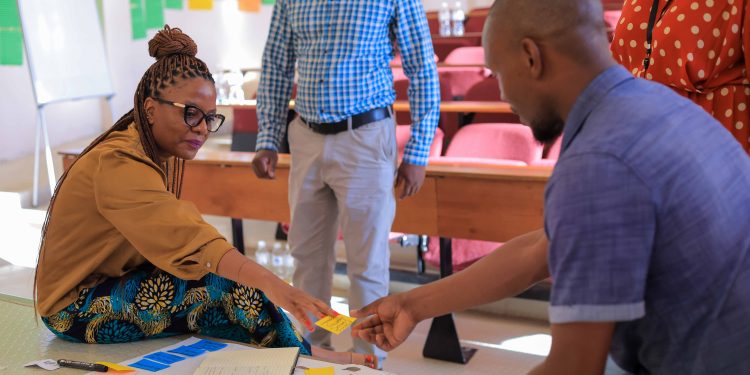
Leaders, policymakers, and education experts from across Africa convened in Gaborone, Botswana, for the 21st Annual General Meeting of the Regional Universities Forum for Capacity Building in Agriculture (RUFORUM), held from December 1–5, 2025. The high policy level dialogues on unlocking higher education for Africa’s young refugees and displaced persons focused on one urgent priority of expanding higher education opportunities for refugees and displaced persons across the continent.
The dialogue highlighted innovative approaches to building inclusive education systems, strengthening partnerships, and investing in human capital to support learners living in fragile or conflict-affected environments. Drawing lessons from countries such as the Democratic Republic of Congo (DRC), participants stressed the need for flexible learning pathways, supportive legal frameworks, and structured mechanisms that allow displaced students not only to access higher education but also to transition into meaningful employment.
A recurring theme was the disproportionate impact of conflict on women and girls. Speakers emphasized the importance of inclusive and equitable systems that respond to their unique vulnerabilities. The Mastercard Foundation reiterated its commitment to supporting 2.5 million refugees and displaced people to secure dignified livelihoods by 2030. Professor Marie-Theresa Sombo Ayanne Safi Mukuna from the University of Kinshasa, placed the DRC at the center of discussion, outlining how decades of instability have uprooted millions of Congolese citizens. Yet, she argued, investment in education and human capital can serve as a powerful engine for resilience, reconstruction, and long-term economic transformation. She highlighted the importance of intentional, global, and multidimensional capacity-building efforts, along with flexible educational models tailored for displacement contexts.
The experiences of Congolese refugees, many fleeing violence in North Kivu, Ituri, and South Kivu, illustrated the scale of educational disruption faced by displaced learners. Alkene, one of the contributors to the dialogue, underscored the urgent need to provide these students with access to higher education, vocational training, and research opportunities. Creating responsive systems that integrate displaced students into academic programs while addressing their psychological, linguistic, and financial needs are of essence. Strengthening host institutions and encouraging collaboration between stable and fragile states emerged as essential steps in ensuring that no learner is excluded.
Botswana’s commitment to free education was highlighted as an example of how national policies can help reverse years of lost progress for displaced youth. Practical measures such as clearer admission policies, credit transfer mechanisms, scholarships, and digital learning tools were seen as vital components of a more predictable educational pathway. Crucially, participants stressed the importance of involving young refugees themselves in shaping solutions.
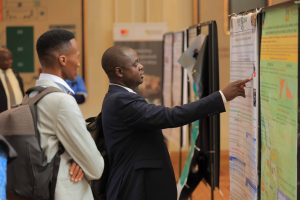
Further contributions came from leaders working on the front lines of forced displacement. Professor Robert Deng, Vice Chancellor of the University of Juba, described the challenges of verifying academic qualifications for students arriving from conflict-affected regions. Lubna Ahmed of the Arab Bank for Economic Development in Africa show cased ongoing support for refugees and internally displaced persons (IDPs) through initiatives in Zambia and UNHCR-led programs.
Across multiple sessions, the shared vision was ambitious but clear: enrolling at least 300,000 displaced students in various RUFORUM member Universities in higher education by 2030. Achieving this target will require recognizing prior learning, implementing credit articulation systems, expanding language support, and developing flexible academic and vocational pathways under coherent legal frameworks. Durable solutions, whether local integration, voluntary repatriation, or third-country resettlement must be accompanied by educational continuity.
Botswana’s Minister of Higher Education Hon. Prince Maele outlined five priority areas for action: i) scholarship programs and admission policies for displaced learners; ii) deepening partnerships; iii) promoting inclusive and diverse learning environments; iv) embedding linguistic democracy in curriculum design, and v) strengthening recruitment policies. A dedicated working group was formed to guide implementation efforts, set timelines, and ensure coordinated action among universities, governments, UN agencies, and development partners.
The meeting closed with a united call for stronger international cooperation to confront the complex educational challenges facing refugees and displaced youth. Participants agreed that flexible, inclusive, and well-supported higher education systems are essential not only for empowering young people in exile but also for fostering long-term resilience and stability across the African continent.