Inside the University-Led Model Turning Refugees Into Environmental Stewards
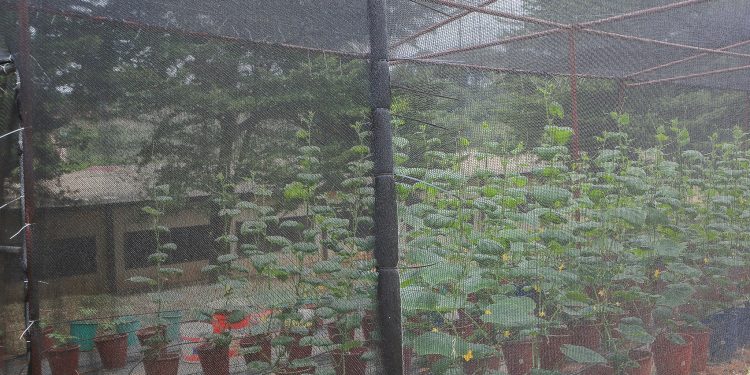
In a camp that shelters more than 80,000 refugees in Cameroon’s Far North Region, amid food insecurity, land degradation, and shrinking humanitarian budgets, a different story is taking unfolding – literally. Rows of tree seedlings, nurtured in nurseries that refugees built and manage themselves, are becoming the visible evidence of a model that development partners have long sought but rarely found – displaced communities driving their own recovery, with a university as partner rather than provider.
That model is now being documented and scaled through the Transforming African Agricultural Universities to Meaningfully Contribute to Africa’s Growth and Development (TAGDev) 2.0 programme. In May 2026, a team from the University of Bamenda traveled to Maroua and the Minawao Refugee Camp to engage directly with camp leadership and refugee communities, a visit that produced compelling evidence of what happens when universities treat refugees not as beneficiaries, but as partners in development.
A Visit Grounded in Evidence, Not Assumption
The trip was not a first encounter but a deliberate follow-up. It built directly on findings from the University of Maroua’s 2025 Agri-Food Systems and Entrepreneurship Centre (ASEC) Annual Report. ASEC, a research and innovation hub under the TAGDev 2.0 Programme, had identified the Minawao Refugee Camp and the Regional Centre for Disarmament, Demobilisation and Reintegration in Mémé as strategic entry points for integrating livelihood restoration with ecosystem rehabilitation. The May 2026 field engagement was designed to operationalise these findings, turning a research recommendation into a working relationship with camp leadership and community members.
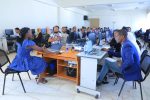
That leadership includes the Camp Coordinator, the President of the refugee community, youth and women leaders, religious representatives, and security officials, a cross-section that provided the TAGDev 2.0 and ASEC teams with a comprehensive understanding of community priorities, ranging from access to scholarships and entrepreneurship support to the inclusion of women, internally displaced persons, and persons with disabilities.
The Evidence: Refugees Already Leading Environmental Restoration
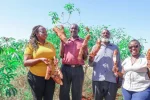
What the team found on the ground made a stronger case. Walking through the camp’s tree nurseries and reforestation sites, visitors encountered systems that refugees had built and sustained largely on their own initiative, nurseries distributed across different sections of the camp, owned and managed by refugee groups trained in seedling production and tree management, cultivating a range of species chosen for both environmental and economic value.
These aren’t token gardens. They are functioning operations where refugees are managing distribution systems, maintaining planted trees, and sustaining reforestation sites aimed at restoring degraded land and combating desertification in one of Cameroon’s most ecologically vulnerable regions. The team’s own assessment was unambiguous: this reflects strong community ownership and an existing capacity base that took root through prior training and has since been sustained by the community itself, with limited external resources.
In a region where climate stress compounds every other hardship refugees face, this kind of grassroots environmental stewardship is not a side benefit, it is core to the community’s long-term resilience.
Beyond the Trees: A Community Ready to Build Livelihoods
The environmental work sits alongside, and reinforces, a broader appetite for economic self-reliance. During stakeholder sessions, refugee leaders pressed for details on eligibility and application processes for TAGDev 2.0 scholarships, and youth representatives voiced strong enthusiasm for skills training and higher education pathways. Women leaders were equally direct, calling for targeted support to expand their role in income-generating activities.
The through line in every conversation, according to the visiting team, was a community actively seeking to move beyond dependency toward self-reliance and not through appeals for aid, but through education, entrepreneurship, and productive work.
Turning Insight Into a Scalable Program
The visit’s findings translated into a concrete set of intervention opportunities, mapped out for implementation:
● Expanding and strengthening refugee-led nursery and reforestation initiatives
● Linking tree planting to income generation through integrated agribusiness support
● Delivering targeted capacity building for youth and women in entrepreneurship and value-chain development
● Facilitating access to scholarships and educational pathways
● Building structured monitoring systems to track progress and outcomes over time
Each element is designed to reinforce the others – education feeding entrepreneurship, entrepreneurship feeding environmental enterprise, and environmental work feeding the food and income security the camp urgently needs.
Why This Model Matters to Development Partners
What makes the Minawao engagement distinctive is not that a university visited a refugee camp, it’s what the visit confirmed: a community with the organizational capacity, technical skill, and motivation to sustain interventions long after initial support is delivered. The refugee-managed nurseries stand as proof of concept that investment in this community yields durable results, not one-off outputs.
The University of Bamenda and University of Maroua are now recommending a structured, needs-based framework for sustained engagement — one that prioritizes scholarship access, entrepreneurship development, climate-smart agri-food systems, and hands-on empowerment for youth and women, backed by rigorous monitoring and evaluation.
For development partners weighing where investment translates into lasting change, Minawao offers a rare combination: measurable environmental impact, demonstrated community ownership, and a university-anchored structure ready to scale it responsibly. The seedlings are already in the ground. What the program needs now is the support to help them and the community tending them grow.